30 October, 2026

Displacement deepens as Israeli forces push Palestinians into shrinking space

Displacement deepens as Israeli forces push Palestinians into shrinking spaceConcerns of ethnic cleansing in Gaza endure as Israeli forces continue to push Palestinians into an ever-smaller fraction o...

Displacement deepens as Israeli forces push Palestinians into shrinking space

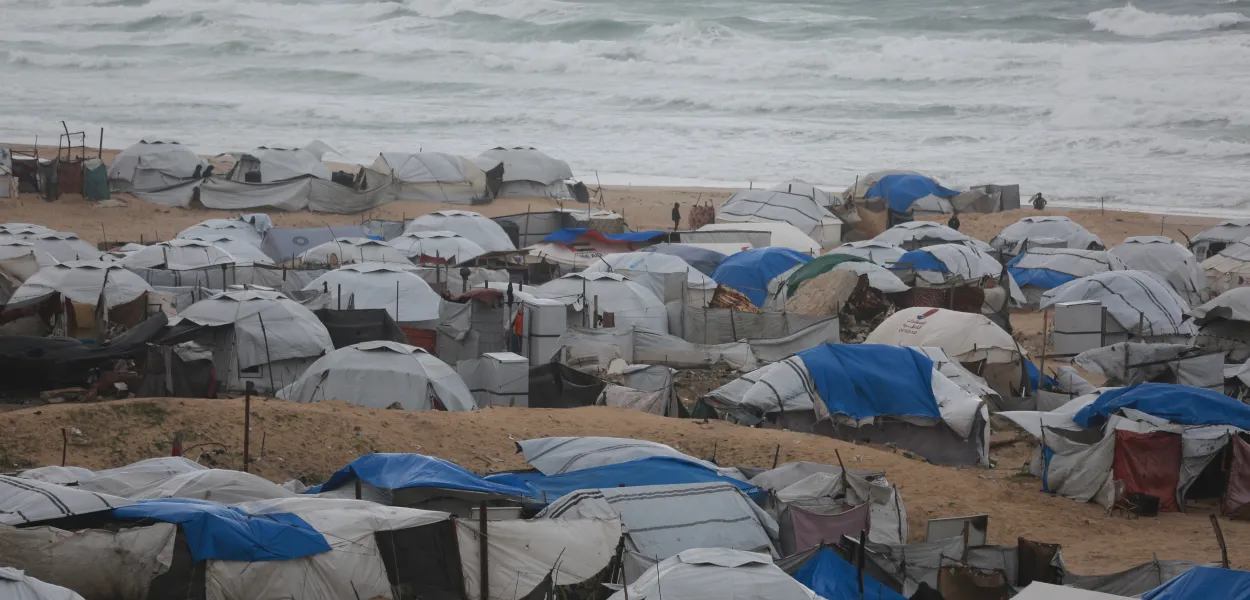
Concerns of ethnic cleansing in Gaza endure as Israeli forces continue to push Palestinians into an ever-smaller fraction of the territory, causing recurrent displacement while destroying the remaining civilian infrastructure and attacking displacement sites.

Palestinians in Gaza are surrounded by Israeli forces from all sides that continue to push them inwards with the stated aim of increasing the Israeli military deployment area to 70% of Gaza’s territory. The relentless contraction of space available to civilians comes with new displacement drivers in areas adjacent to Israeli forces’ deployment lines, commonly known as the “yellow line”.

Over the past two weeks, the UN Human Rights Office in the Occupied Palestinian Territory has documented the westward expansion of Israeli military deployment areas triggering new displacement of Palestinians in Al Shujaiyeh, Gaza City, and in eastern Al Bureij, eastern Deir al Balah and eastern Al Maghazi, Middle Gaza. In Al Shujaiyeh, Israeli forces’ westward push came with at least two Israeli attacks reported on displacement encampments, and detonations of the few buildings left standing in the area with the reported use of explosive robots.

According to reports received by UN Human Rights Office - OPT, an Israeli drone dropped munitions on tents sheltering displaced families at Al Shujaiyeh junction near the so-called yellow line on 25 October, setting tents on fire burnt for nearly five hours. The Palestinian Ministry of Public Works and Housing in Gaza said the fire displaced 200 families comprising 800 people, most of them women, children and elderly persons.

“The nightmare of displacement in Gaza is both acute and chronic,” said Ajith Sunghay, Head of UN Human Rights - OPT. “Those displaced before the announcement of a ceasefire have little to no prospect of return to the areas they fled, most of which are inaccessible because they fall beyond the so-called yellow line. And they continue to be displaced again and again.”

As an occupying power, Israel must cease the forcible transfer of Palestinians within the Gaza strip, a war crime that may also amount to a crime against humanity. Israel must facilitate the Palestinians’ safe and dignified return to their homes and the areas they fled. Instead, Israeli military operations have displaced nearly everyone in Gaza multiple times, laid to waste the infrastructure needed to support civilian life, and damaged or destroyed over 80% of all buildings and structures according to the United Nations Satellite Centre.

Today, Israeli forces appear to treat the yellow line as a kill zone, preventing Palestinians from returning to what is left of their homes on the other side. The displacement crisis is exacerbated by the restrictions imposed by Israeli authorities on the entry of shelter-related humanitarian assistance. And Israeli bombardment never ceased, even a year after the announcement of a ceasefire, while Palestinian families remained trapped in inadequate shelters, struggling to secure their most basic needs and deprived of their rights.

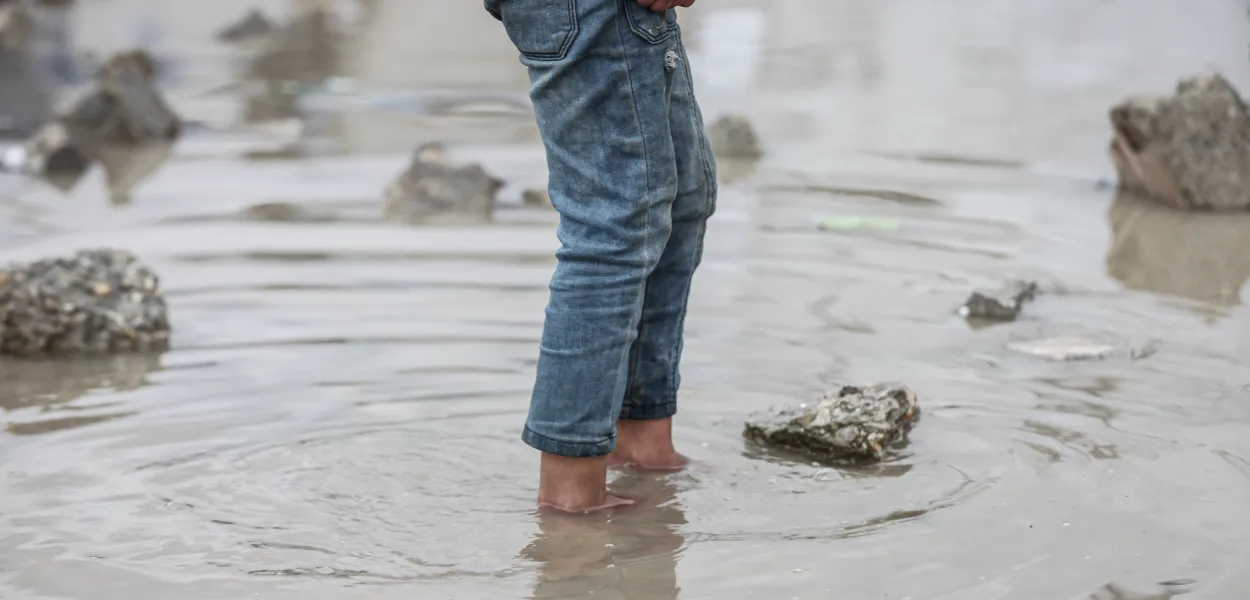
“There must be an end to this suffering. This is the fourth year of displacement for most Palestinians in Gaza, the fourth winter in tents too flimsy to withstand the rain, and they are still under fire through it all,” said Sunghay. “Let this be the last.”

21 October, 2026

Urgent action needed to protect Palestinian olive harvest

Urgent action needed to protect Palestinian olive harvestUN Human Rights - Palestine calls on all States and donors to take urgent action, beyond condemnations and statements, to press for the protect...

Urgent action needed to protect Palestinian olive harvest

UN Human Rights - Palestine calls on all States and donors to take urgent action, beyond condemnations and statements, to press for the protection of Palestinian communities as the olive harvest season gets off to an ominous start.

At least 160 Israeli settler attacks related to the olive harvest have been recorded in the occupied West Bank in the first two weeks of October, according to the UN Office for the Coordination of Humanitarian Affairs (OCHA), often under the protection or with the participation of Israeli forces. Settlers continued the attacks over the past few days, including assaulting an international journalist while covering the harvest, and attacking European diplomatic representatives on a visit to a Palestinian community shortly after the start of the harvest season. Settlers attacking the olive harvest have used live ammunition and arson, destroyed olive trees and groves including ancient trees, damaged Palestinian property, and stolen harvested olives and agricultural equipment.

In addition to the attacks by Israeli forces and settlers, thousands of Palestinian farmers are unable to access their olive trees for the harvest due to severe Israeli movement restrictions that dramatically worsened over the past three years. In the meantime, illegally present settlers are allowed to access Palestinians’ lands and harvest their crops.

“Palestinians often say that olive trees are symbolic of their existence as a group and their connection to the land. Attacks on the olive harvest can’t be separated from the pervasive Israeli assault on Palestinians’ existence as a group connected to this land,” said Ajith Sunghay, Head of UN Human Rights – OPT. “This is yet another tool of displacement and dispossession, adding to the suffering of communities whose rights are under attack on a daily basis.”

The Palestinian Ministry of Agriculture estimates the losses of the Palestinian olive sector at USD 157 million since October 2023 in the West Bank in Gaza. The Ministry said 90% of Gaza’s two million olive trees have been destroyed since October 2023. In the West Bank, 286,000 olive trees have been damaged through the end of September 2026 including 25,000 trees in 2023, 70,000 trees in 2024, 91,000 trees in 2025, and 100,000 trees in 2026 even before the start of this year’s olive harvest season.

Sunghay reiterated the call to action issued ahead of the season by the Protection Cluster led by UN Human Rights – Palestine — a network of over 100 international and national organizations that focuses on assessing and responding to the protection risks and needs of the most vulnerable Palestinians. The Protection Cluster urged member states to increase international and diplomatic field presence and engagement in high-risk communities, particularly during critical harvesting periods, complementing existing protective presence arrangements and focusing attention on locations facing recurrent violence and access restrictions.
Member states must exercise pressure on Israel to:

  • Ensure Palestinians’ safe, timely, and meaningful access to their agricultural land.
  • Protect Palestinian farmers from violence, intimidation, and expulsion.
  • Protect agricultural land, crops, and productive assets.
  • Ensure access for humanitarian and emergency responders.
  • Strengthen accountability and provide legal remedies.
  • End settlement expansion and related measures that contribute to violence, dispossession, and displacement.

The Protection Cluster also called upon donors to provide timely, adequate, and flexible funding for protective presence, community-based protection, emergency preparedness, legal assistance and food security and livelihoods interventions, enabling partners to respond rapidly as access conditions and needs change.

Read the joint Protection Cluster and Food Security Sector snapshot report to learn more about the protection risks facing olive harvest farmers, the hotspots of prioritized, at-risk areas related to the harvest season, and the recommendations of Palestinian communities towards more safety: Protection And Food Security and Livelihoods | West Bank Olive Harvest 2026 | Preparatory Workshop Outcomes - occupied Palestinian territory | ReliefWeb

14 October, 2026

Israeli raids in Ramallah raise concerns about shrinking civic space

Israeli forces raided premises in Al Bira, Ramallah, claiming they were offices of the Addameer Prisoner Support and Human Rights Association (Addameer) and the Union of Palestinian Women’s Committee ...

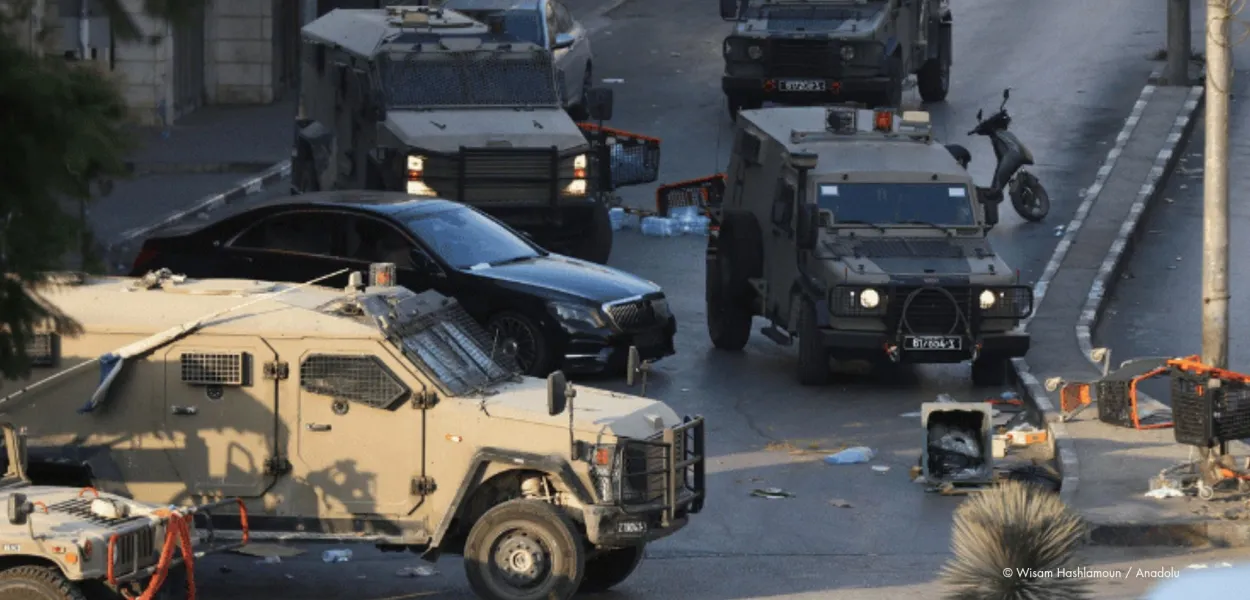
Israeli forces raided premises in Al Bira, Ramallah, claiming they were offices of the Addameer Prisoner Support and Human Rights Association (Addameer) and the Union of Palestinian Women’s Committee (UPWC), on 13 October 2026. This continues an alarming Israeli crackdown on Palestinian civic space marked by violent raids, arbitrary detentions, and undue restrictions on Palestinians’ freedoms of expression, association, and assembly.

During the raid, Israeli soldiers confiscated files and equipment and detained a journalist and a former prisoner. They left a written notice on the alleged premises of Addameer, a prominent human rights organization, claiming it is an “illegal entity”. Israeli forces also raided the courtyard of the Palestine Medical Complex, the largest public medical facility in the occupied West Bank.

Addameer and UPWC are two of six leading Palestinian civil society organizations designated as “terrorist” by Israeli authorities in 2021 based on vague definitions which led to unlawful restrictions on their human rights work. To date, no evidence was presented to substantiate the accusations.

Israeli authorities must immediately stop the crackdown on Palestinian civic space. Such raids and the detention of human rights defenders and protection workers have had a chilling effect on human rights work in the Occupied Palestinian Territory at a time when working towards protection of civilians, accountability, and justice is most desperately needed.

10 October, 2026

One year after ceasefire announcement, killings continue across Gaza

A year after the announcement of a ceasefire in Gaza, Palestinians are still living under constant Israeli fire in attacks both near and far from the so-called “yellow line” that raise serious concern...

A year after the announcement of a ceasefire in Gaza, Palestinians are still living under constant Israeli fire in attacks both near and far from the so-called “yellow line” that raise serious concerns about continued crimes under international law, including war crimes.

“This is not life; this is endless torment with no end in sight. Human life has no value anymore,” said one father of three in Gaza. “There is not a single thing I can think of to ensure my children will survive from one minute to the next. We are constantly at the mercy of a random bullet, shelling, or an aerial attack. Sometimes it feels like they are playing games with our lives.”

Throughout the past year, Israeli attacks never ceased, killing and injuring Palestinians and causing recurrent displacement across Gaza. Over 1,400 Palestinians have been killed in Gaza according to the Palestinian Ministry of Health since the announcement of a ceasefire on 10 October 2025. UN Human Rights – OPT has so far verified1,076 conflict-related deaths between the ceasefire announcement and the end of July 2026, including 268 children, 126 women, and 682 men — women and children making up 37 per cent of all verified fatalities.

Since 7 October 2023, Israeli forces have killed over 20,000 children in Gaza, according to the Palestinian Ministry of Health. Since the announcement of a ceasefire in October 2025, UN Human Rights – OPT has verified the killing of 64 children in reported Israeli attacks that killed only children and no adults. This is in addition to 30 women and 10 more children killed in reported Israeli attacks in which all those killed were women or women and children with no men fatalities. The total proportion of civilian fatalities is likely much higher, as this number does not take into account all the civilian men killed in Gaza.
This pattern raises serious concerns that Israel is directing attacks against civilians not directly participating in hostilities — a war crime.

“Violence of this magnitude is outrageous at any time. To record it during a supposed ceasefire is simply unfathomable,” said Ajith Sunghay, Head of UN Human Rights – OPT. “Palestinians have endured these attacks while trapped within an ever-shrinking part of Gaza’s territory, surrounded from all sides by Israeli forces, and struggling to secure even the most basic necessities of life.”

The Israeli military has consistently expanded its deployment areas starting from nearly 53 per cent of Gaza’s territory at the time of the ceasefire announcement, with the objective of reaching 70 per cent of the territory as publicly stated by the Israeli Prime Minister. The boundary of these deployment areas has been commonly known as the “yellow line”, but monitoring over the past year demonstrates there is no single, identifiable line. Instead, Israeli forces continuously moved inwards, along ever-shifting lines not known to Palestinians, with frequent incursions into Palestinian communities.

While most verified fatalities have been recorded in reported Israeli attacks far away from Israeli military deployment areas, the conduct of Israeli forces around the so-called yellow lines raises serious concerns that it is being treated as a kill zone where lethal force is arbitrarily used.

A two-year-old boy was shot and killed in the early morning hours of 14 June 2026 in the arms of his father on their way to visit an aunt in Wadi Al Salqa, eastern Deir Al Balah. They were on a road approximately 150-200 meters west of the so-called “yellow line”, used routinely by Palestinians before the incident. On the way, the father saw a group of Israeli soldiers stationed at the entrance of an abandoned house in an apparent incursion west of the line. The soldiers were only 10 meters away, he told UN Human Rights – OPT, and they started shooting immediately.

“I saw my boy’s left eye come out of his face,” the father said. “As I realized a bullet penetrated his back and came out from his eye, another bullet struck me in the calf. I saw a bone fragment shoot out of my leg and land on the ground in front of me. I fell to the ground. My son was gasping for his last breath. I tightened my arms around him.”

The boy was taken away by soldiers, his father said, wrapped in a plastic sheet, “no longer moving or making any sounds”. The father was then stripped down, blindfolded, and dragged east, crossing the yellow line. Israeli soldiers moved him from vehicle to vehicle and from one site to another until he passed out from the bleeding around midnight.

“I woke up in Al Aqsa Martyrs Hospital in Deir Al Balah. I was informed that my son’s body was handed over as well. I do not know how and when we got there,” the father said.

Since the announcement of a ceasefire in October 2025, as of the end of July 2026, 331 Palestinians have been killed in the vicinity of the so-called yellow line as verified by UN Human Rights – OPT, including 66 children, 27 women, and 238 men. In many verified cases, there was no information to suggest the victims were posing any threat to Israeli forces. Many were carrying out ordinary civilian activities at the time of their killing, and some were killed while inside their tents. Targeting and killing civilians who are not directly participating in hostilities is a war crime regardless of their location or proximity to military deployment areas.


Sunghay reiterated UN Human Rights’ calls on third States to implement their duty to exercise influence over Israel to stop its violations of international law in Gaza, including by ceasing the supply of weapons and munitions facilitating serious violations of international law, and supporting the work of international accountability mechanisms.

“Accountability is not an afterthought or part of a distant future of recovery. It is a cornerstone of deterrence and non-recurrence. And it is already overdue,” he said.
24 September, 2026

Israel must immediately halt demolitions in Msafer Yatta

Israel must immediately halt demolitions in Msafer YattaIsrael must immediately halt the mass destruction of Palestinian villages in Msafer Yatta, South Hebron Hills, and the forcible transfer of the ...

Israel must immediately halt demolitions in Msafer Yatta

Israel must immediately halt the mass destruction of Palestinian villages in Msafer Yatta, South Hebron Hills, and the forcible transfer of the residents, compounding fears of ethnic cleansing in the occupied West Bank.

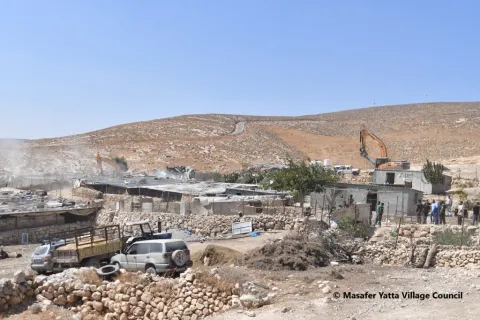
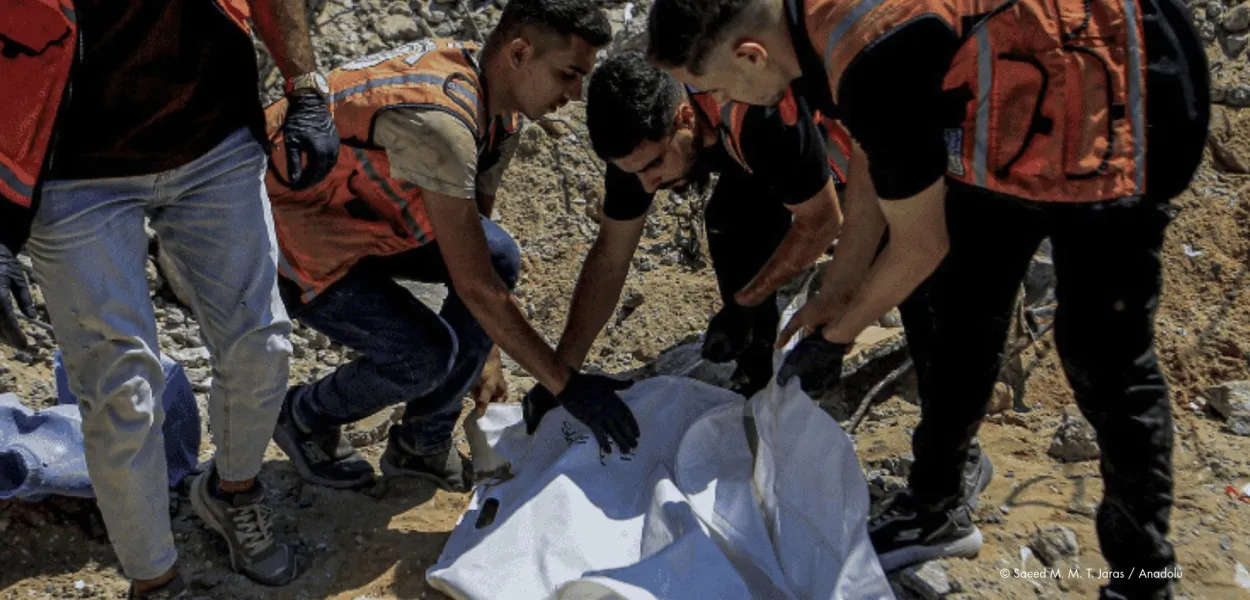
Image
Destruction in Msafer Yatta

On 23 September, Israeli forces with Israeli Civil Administration bulldozers demolished dozens of Palestinian structures including homes, agricultural infrastructure as well as water tanks and solar panels in the village of Jinba. Three additional villages in Msafer Yatta have already been destroyed, almost entirely, in September 2026. Overall, there are 12 villages in Msafer Yatta housing over 1,100 Palestinians, most of whom have owned and lived on the land for generations.

“Our homes were torn down today, wiped from the face of the earth,” one resident of Jinba told UN Human Rights – OPT, “This isn’t the demolition of rocks, this is the destruction of years of hard work and memories.”

Israeli demolitions of Palestinian homes and infrastructure have so far displaced 1,500 people in the occupied West Bank in 2026 according to OCHA — over a third of all 4,300 forcibly displaced Palestinians this year.

“The forcible transfer of a civilian population from their land by an occupying power is a war crime. The case of Msafer Yatta also raises serious concerns of deepening Israel’s violation of international law’s prohibition of racial segregation and apartheid,” said Ajith Sunghay, the Head of UN Human Rights – OPT.

In the 1980s, Israel declared some 30,000 dunums of Msafer Yatta where Palestinians had lived long before 1967 as “Firing Zone 918”. Waves of Israeli eviction and demolition orders have continued in the area since then with Israeli authorities consistently citing the requirement of military training in the designated firing zone.

However, Israeli settlers live in at least 11 outposts within Firing Zone 918 without contestation, most of which were created after October 2023. All settlements are unlawful under international law, but outposts are illegal even under Israeli law. The Israeli Government has retroactively regularized at least one of the outposts partially located in Firing Zone 918 in February 2023.

“Israel’s toolbox for Palestinian erasure in the occupied West Bank is vast: demolitions, evictions, settlement expansion, settler violence, arbitrary zoning, land confiscations, appropriation of heritage sites, raids, devastating violence,” Sunghay said, “But it is all happening under the same banner — Israel consolidating its annexation of as much Palestinian territory as possible, with as few Palestinians as possible, as fast as possible.”

“Member States must act now while they still can, to halt this project and ensure Palestinians are able to exercise their right to self-determination,” he added.On 23 September, Israeli forces with Israeli Civil Administration bulldozers demolished dozens of Palestinian structures including homes, agricultural infrastructure as well as water tanks and solar panels in the village of Khirbet Jinba. Three additional villages in Msafer Yatta have already been destroyed, almost entirely, in September 2026. Overall, there are 12 villages in Msafer Yatta housing over 1,100 Palestinians, most of whom have owned and lived on the land for generations.

23 September, 2026

Remarks on mine action response

Remarks by Ajith Sunghay, Head of UN Human Rights - PalestineDonor Forum on the Mine Action Response in the Occupied Palestinian TerritoryThank you for convening this important discussion on Humanitar...

Remarks by Ajith Sunghay, Head of UN Human Rights - Palestine

Donor Forum on the Mine Action Response in the Occupied Palestinian Territory

Thank you for convening this important discussion on Humanitarian Mine Action in the Occupied Palestinian Territory.

Our colleagues from national and international partners of the Protection Cluster’s Mine Thematic Area and the United Nations Mine Action Service have carried out extraordinary work in impossible conditions. They have highlighted the severe threat of explosive ordinance and contamination in Gaza, advocated for protection through education and clearance, and charted a path forward for safe humanitarian response and rebuilding in Gaza.

Thank you to each of you for your commitment and efforts.

As outlined in the joint Protection and Mine Action analysis that we released last week, explosive ordnance contamination has become one of the defining humanitarian and protection challenges in the OPT and it undermines the full enjoyment of human rights.
In Gaza, the extensive use of explosive weapons in a densely populated environment has caused exceptionally high levels of death, traumatic injury, displacement and destruction, and left an estimated 68 million metric tonnes of debris and potentially contaminated rubble where hundreds and hundreds of missing people now lie.

Explosive ordnance remains embedded in collapsed homes, damaged infrastructure and rubble. This creates immediate risks to civilians, while making humanitarian access, debris management, the dignified recovery of human remains, reconstruction, and return considerably more difficult.

The challenge extends beyond Gaza. In the West Bank, longstanding contamination is increasingly compounded by militarized operations in populated areas and emerging hazards associated with wider regional escalation.

The harm caused by explosive ordnance can present itself long after an attack. Its effects extend through ongoing exposure to unexploded ordnance in damaged and dangerous homes and infrastructure; it disrupts essential services and causes long-term psychological distress and repeated displacement.

Survivors frequently require emergency medical treatment, rehabilitation, psychosocial support and other specialized services.
At community level, persistent fear of explosive ordnance can restrict movement, access to essential services and livelihoods, and prevent people from safely returning to their homes and communities.

Humanitarian Mine Action should not be understood as a stand-alone technical activity. Explosive Hazard Assessments, Explosive Ordnance Disposal, risk education, victim assistance and information management are all directly relevant to civilian protection, recovery and the enjoyment of rights. 

For Mine Action and the Protection Cluster, this means continuing to advocate collectively for several fundamental requirements.
1. We need safe, sustained and predictable humanitarian access for Mine Action actors.
2. We need timely authorization for Mine Action activities and access for qualified personnel and the specialized equipment required to assess and mitigate hazards.
3. We need predictable, sustained and multi-year financing, commensurate with the scale and duration of the contamination challenge.
4. We need continued investment in Palestinian Mine Action capacity, including national expertise and institutions that will be critical to the longer-term recovery.
5. We also need to ensure that Mine Action is systematically reflected in humanitarian planning, debris management, early recovery and reconstruction.
6. And finally, we need significant and meaningful diplomatic pressure to remind all Member States to uphold obligations under international law. This requires parties to a conflict to clear Explosive Remnants of War, to take measures to protect civilians from the effects of these weapons and to assist the efforts of international and non-governmental organizations working in these areas.

I hope that today's Forum can help us translate this shared analysis into concrete changes on the ground.
Thank you.


Read the Protection Cluster’s analysis on civilian harm associated with explosive ordnance in the Occupied Palestinian territory: A Continuum of Civilian Harm and the Path to Protection: How Explosive Ordnance Shapes Protection Risks and the Imperative for Humanitarian Mine Action in the Occupied Palestinian Territory - occupied Palestinian territory | ReliefWeb

* In the Occupied Palestinian Territory, the UN Human Rights Office has been coordinating protection response under the umbrella of the Humanitarian Country Team since 2009. The Protection Cluster in the Occupied Palestinian Territory has over 100 partners, covering Gaza and the West Bank, and focusing on a wide variety of protection issues including mine action, gender-based violence, and child protection.
 

21 August, 2026

Gaza: Civilians Continue to Pay the Price as Deadly Attacks Persist

Gaza: Civilians Continue to Pay the Price as Deadly Attacks PersistOn 18 and 19 August alone, at least 17 Palestinians, including children and women, were reportedly killed in Israeli attacks across G...

Gaza: Civilians Continue to Pay the Price as Deadly Attacks Persist

On 18 and 19 August alone, at least 17 Palestinians, including children and women, were reportedly killed in Israeli attacks across Gaza. Among the dead was a 13-year-old boy and his father killed in a strike on a seaside café, in addition to a 13-year-old girl killed in an attack on a police facility in Gaza City.

These incidents are a stark reminder that, despite occasional drops in the number of reported attacks, civilians throughout Gaza remain exposed to persistent, unpredictable, lethal harm.

Between 13 and 19 August, at least 22 Palestinians were reportedly killed in Israeli military attacks across Gaza. Under international humanitarian law, attacks directed at civilians, as well as indiscriminate and disproportionate attacks, are prohibited. Such attacks may amount to war crimes and other atrocity crimes.

The continuing pattern of attacks against police personnel and facilities in Gaza is alarming. UN Human Rights recorded an attack on 19 August on the Municipal Police headquarters in Gaza City, killing at least nine Palestinians, including a 13-year-old girl and eight police officers. Among the officers killed was the Director of the Women's Police in Gaza Governorate, Fatena Al-Sahar. The strike occurred in a densely populated area hosting large numbers of internally displaced people, injuring other civilians, including women and children.

Between January and August 2026, UN Human Rights has recorded at least 18 Israeli attacks against police personnel in Gaza, resulting in the killing of at least 77 Palestinians, including 57 police personnel, six children and four women. Six of these attacks were carried out since June.

Under international humanitarian law, police personnel are civilians protected against attacks. Targeting them is a war crime. They may lose this protection only if and for such time as they directly participate in hostilities. As the occupying Power, Israel has the obligation to ensure public order and safety. Such attacks further dismantle civilian law enforcement structures in Gaza and undermine protection to communities already subjected to wide-ranging human rights violations.

The concentration of casualties in these attacks, in densely populated civilian areas, including a café, a tent sheltering internally displaced people, a civilian vehicle, and police headquarters surrounded by displaced families, is part of a wider pattern of indiscriminate and disproportionate Israeli attacks against Palestinians documented by UN Human Rights since October 2023.

"It is hard to see any ‘military necessity’ of Israel’s ongoing attacks across a decimated landscape, which continue to kill and maim civilians, including children and police personnel,” said Ajith Sunghay, head of UN Human Rights’ office in Palestine. “The right to life is the foundational right for all. But it seems in Gaza, there is no respect left for human rights as death, injury and destruction continue day after day.”

19 August, 2026

Latest comment from Israel Government Minister beyond the bounds of humanity

Latest comment from Israel Government Minister beyond the bounds of humanity The latest comments by Israel’s Minister of National Security, Itamar Ben-Gvir, advocating and inciting violence amoun...

Latest comment from Israel Government Minister beyond the bounds of humanity 

The latest comments by Israel’s Minister of National Security, Itamar Ben-Gvir, advocating and inciting violence amounting to atrocity crimes, are yet another example of the utter contempt for international humanitarian law, international human rights law and the basic tenets of humanity displayed by senior Israeli Government officials.  

These dehumanising remarks follow the devastating human toll of 73,400 Palestinians killed and 174,312 injured in Gaza since 7 October 2023, according to the Palestinian Health Ministry, alongside 1,123 Palestinians killed in the occupied West Bank.

In January 2024, the International Court of Justice handed down binding provisional measures requiring Israel to “take all measures within its power to prevent and punish the direct and public incitement to commit genocide in relation to members of the Palestinian group in the Gaza Strip”.

Today, in the wake of the utter destruction of Gaza and unrelenting Israeli settler attacks and forced displacement of Palestinians in the West Bank, statements from senior Israeli officials to justify and encourage further unlawful mass killings of Palestinians continue unabated. It is beyond the bounds of humanity.

The Israeli Government must promptly and unequivocally condemn such incitement to violence, investigate instances of incitement, particularly from senior government officials, and hold those responsible to account. Third States must also take steps to fulfil their obligations to prevent and punish atrocity crimes.