30 October, 2026

Displacement deepens as Israeli forces push Palestinians into shrinking space

Displacement deepens as Israeli forces push Palestinians into shrinking spaceConcerns of ethnic cleansing in Gaza endure as Israeli forces continue to push Palestinians into an ever-smaller fraction o...

Displacement deepens as Israeli forces push Palestinians into shrinking space

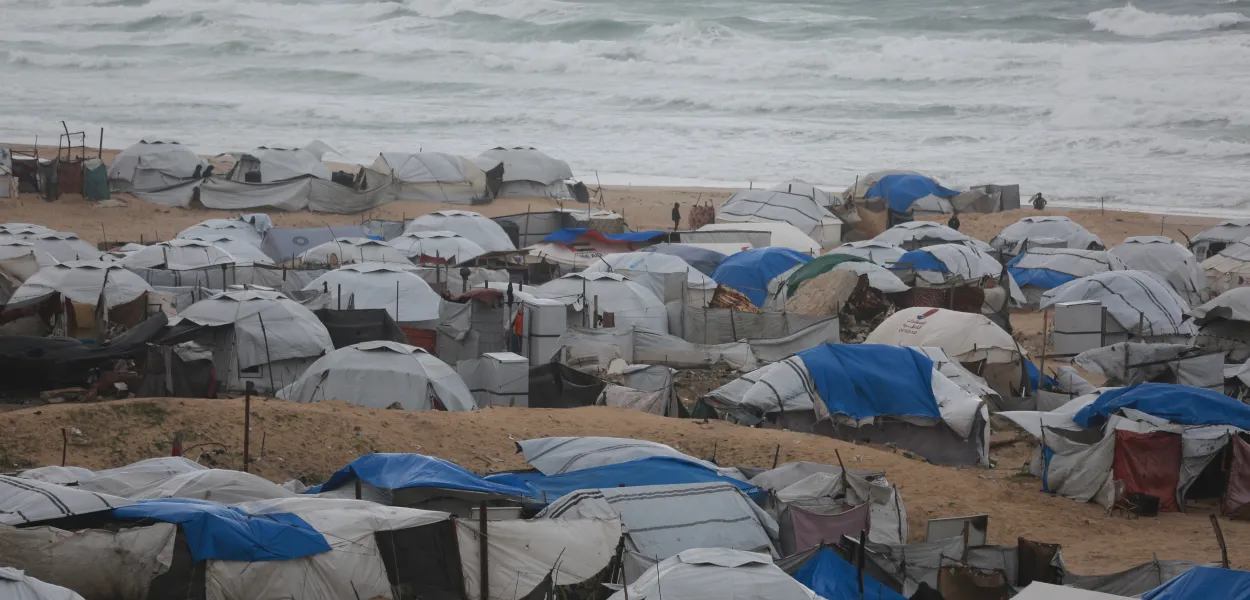
Concerns of ethnic cleansing in Gaza endure as Israeli forces continue to push Palestinians into an ever-smaller fraction of the territory, causing recurrent displacement while destroying the remaining civilian infrastructure and attacking displacement sites.

Palestinians in Gaza are surrounded by Israeli forces from all sides that continue to push them inwards with the stated aim of increasing the Israeli military deployment area to 70% of Gaza’s territory. The relentless contraction of space available to civilians comes with new displacement drivers in areas adjacent to Israeli forces’ deployment lines, commonly known as the “yellow line”.

Over the past two weeks, the UN Human Rights Office in the Occupied Palestinian Territory has documented the westward expansion of Israeli military deployment areas triggering new displacement of Palestinians in Al Shujaiyeh, Gaza City, and in eastern Al Bureij, eastern Deir al Balah and eastern Al Maghazi, Middle Gaza. In Al Shujaiyeh, Israeli forces’ westward push came with at least two Israeli attacks reported on displacement encampments, and detonations of the few buildings left standing in the area with the reported use of explosive robots.

According to reports received by UN Human Rights Office - OPT, an Israeli drone dropped munitions on tents sheltering displaced families at Al Shujaiyeh junction near the so-called yellow line on 25 October, setting tents on fire burnt for nearly five hours. The Palestinian Ministry of Public Works and Housing in Gaza said the fire displaced 200 families comprising 800 people, most of them women, children and elderly persons.

“The nightmare of displacement in Gaza is both acute and chronic,” said Ajith Sunghay, Head of UN Human Rights - OPT. “Those displaced before the announcement of a ceasefire have little to no prospect of return to the areas they fled, most of which are inaccessible because they fall beyond the so-called yellow line. And they continue to be displaced again and again.”

As an occupying power, Israel must cease the forcible transfer of Palestinians within the Gaza strip, a war crime that may also amount to a crime against humanity. Israel must facilitate the Palestinians’ safe and dignified return to their homes and the areas they fled. Instead, Israeli military operations have displaced nearly everyone in Gaza multiple times, laid to waste the infrastructure needed to support civilian life, and damaged or destroyed over 80% of all buildings and structures according to the United Nations Satellite Centre.

Today, Israeli forces appear to treat the yellow line as a kill zone, preventing Palestinians from returning to what is left of their homes on the other side. The displacement crisis is exacerbated by the restrictions imposed by Israeli authorities on the entry of shelter-related humanitarian assistance. And Israeli bombardment never ceased, even a year after the announcement of a ceasefire, while Palestinian families remained trapped in inadequate shelters, struggling to secure their most basic needs and deprived of their rights.

“There must be an end to this suffering. This is the fourth year of displacement for most Palestinians in Gaza, the fourth winter in tents too flimsy to withstand the rain, and they are still under fire through it all,” said Sunghay. “Let this be the last.”

10 October, 2026

One year after ceasefire announcement, killings continue across Gaza

A year after the announcement of a ceasefire in Gaza, Palestinians are still living under constant Israeli fire in attacks both near and far from the so-called “yellow line” that raise serious concern...

A year after the announcement of a ceasefire in Gaza, Palestinians are still living under constant Israeli fire in attacks both near and far from the so-called “yellow line” that raise serious concerns about continued crimes under international law, including war crimes.

“This is not life; this is endless torment with no end in sight. Human life has no value anymore,” said one father of three in Gaza. “There is not a single thing I can think of to ensure my children will survive from one minute to the next. We are constantly at the mercy of a random bullet, shelling, or an aerial attack. Sometimes it feels like they are playing games with our lives.”

Throughout the past year, Israeli attacks never ceased, killing and injuring Palestinians and causing recurrent displacement across Gaza. Over 1,400 Palestinians have been killed in Gaza according to the Palestinian Ministry of Health since the announcement of a ceasefire on 10 October 2025. UN Human Rights – OPT has so far verified1,076 conflict-related deaths between the ceasefire announcement and the end of July 2026, including 268 children, 126 women, and 682 men — women and children making up 37 per cent of all verified fatalities.

Since 7 October 2023, Israeli forces have killed over 20,000 children in Gaza, according to the Palestinian Ministry of Health. Since the announcement of a ceasefire in October 2025, UN Human Rights – OPT has verified the killing of 64 children in reported Israeli attacks that killed only children and no adults. This is in addition to 30 women and 10 more children killed in reported Israeli attacks in which all those killed were women or women and children with no men fatalities. The total proportion of civilian fatalities is likely much higher, as this number does not take into account all the civilian men killed in Gaza.
This pattern raises serious concerns that Israel is directing attacks against civilians not directly participating in hostilities — a war crime.

“Violence of this magnitude is outrageous at any time. To record it during a supposed ceasefire is simply unfathomable,” said Ajith Sunghay, Head of UN Human Rights – OPT. “Palestinians have endured these attacks while trapped within an ever-shrinking part of Gaza’s territory, surrounded from all sides by Israeli forces, and struggling to secure even the most basic necessities of life.”

The Israeli military has consistently expanded its deployment areas starting from nearly 53 per cent of Gaza’s territory at the time of the ceasefire announcement, with the objective of reaching 70 per cent of the territory as publicly stated by the Israeli Prime Minister. The boundary of these deployment areas has been commonly known as the “yellow line”, but monitoring over the past year demonstrates there is no single, identifiable line. Instead, Israeli forces continuously moved inwards, along ever-shifting lines not known to Palestinians, with frequent incursions into Palestinian communities.

While most verified fatalities have been recorded in reported Israeli attacks far away from Israeli military deployment areas, the conduct of Israeli forces around the so-called yellow lines raises serious concerns that it is being treated as a kill zone where lethal force is arbitrarily used.

A two-year-old boy was shot and killed in the early morning hours of 14 June 2026 in the arms of his father on their way to visit an aunt in Wadi Al Salqa, eastern Deir Al Balah. They were on a road approximately 150-200 meters west of the so-called “yellow line”, used routinely by Palestinians before the incident. On the way, the father saw a group of Israeli soldiers stationed at the entrance of an abandoned house in an apparent incursion west of the line. The soldiers were only 10 meters away, he told UN Human Rights – OPT, and they started shooting immediately.

“I saw my boy’s left eye come out of his face,” the father said. “As I realized a bullet penetrated his back and came out from his eye, another bullet struck me in the calf. I saw a bone fragment shoot out of my leg and land on the ground in front of me. I fell to the ground. My son was gasping for his last breath. I tightened my arms around him.”

The boy was taken away by soldiers, his father said, wrapped in a plastic sheet, “no longer moving or making any sounds”. The father was then stripped down, blindfolded, and dragged east, crossing the yellow line. Israeli soldiers moved him from vehicle to vehicle and from one site to another until he passed out from the bleeding around midnight.

“I woke up in Al Aqsa Martyrs Hospital in Deir Al Balah. I was informed that my son’s body was handed over as well. I do not know how and when we got there,” the father said.

Since the announcement of a ceasefire in October 2025, as of the end of July 2026, 331 Palestinians have been killed in the vicinity of the so-called yellow line as verified by UN Human Rights – OPT, including 66 children, 27 women, and 238 men. In many verified cases, there was no information to suggest the victims were posing any threat to Israeli forces. Many were carrying out ordinary civilian activities at the time of their killing, and some were killed while inside their tents. Targeting and killing civilians who are not directly participating in hostilities is a war crime regardless of their location or proximity to military deployment areas.


Sunghay reiterated UN Human Rights’ calls on third States to implement their duty to exercise influence over Israel to stop its violations of international law in Gaza, including by ceasing the supply of weapons and munitions facilitating serious violations of international law, and supporting the work of international accountability mechanisms.

“Accountability is not an afterthought or part of a distant future of recovery. It is a cornerstone of deterrence and non-recurrence. And it is already overdue,” he said.
18 June, 2026

Fatalities since ceasefire announcement in Gaza

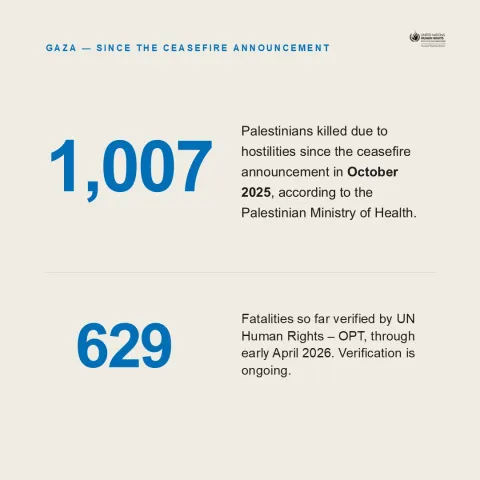
More than 1,000 Palestinians killed in Gaza since the announcement of a ceasefire in October 2025. Here is what we know:  269 women and children among the 629 fatalities verified by UN Human Righ...

More than 1,000 Palestinians killed in Gaza since the announcement of a ceasefire in October 2025. Here is what we know:

Image
1,007 killed according to MOH, 629 verified killed so far

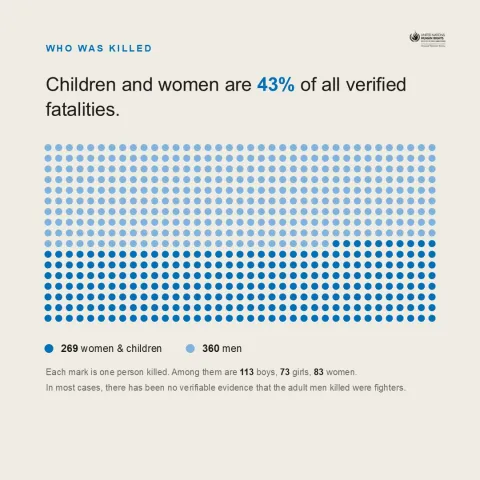
269 women and children among the 629 fatalities verified by UN Human Rights - Palestine in Gaza since the announcement of a ceasefire in October 2025 through early April, verification is ongoing.

Image
269 women and children among 629 verified fatalities

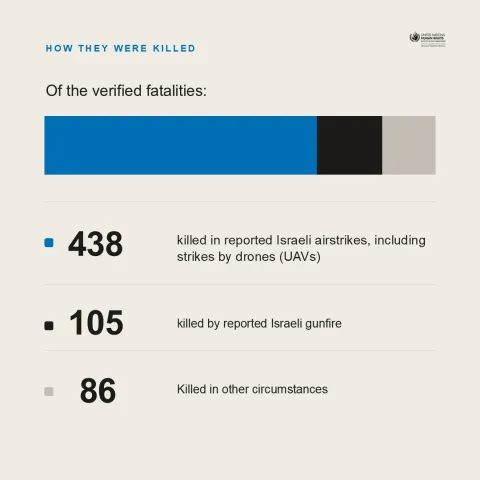
438 of the 629 verified fatalities since the announcement of a ceasefire in Gaza were killed in reported Israeli airstrikes, including strikes by unmanned aerial vehicles (UAVs).
 

Image
Breakdown of fatalities by reported means of killing

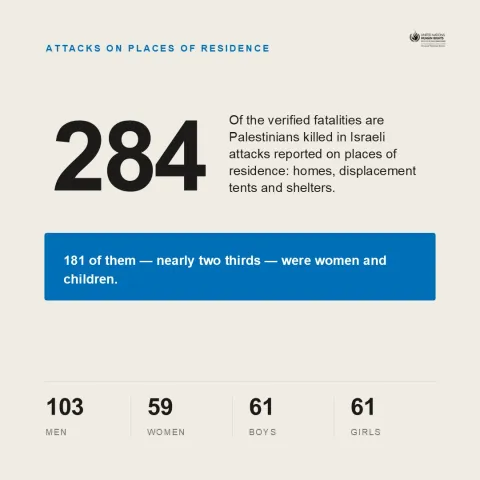
284 of the 629 fatalities verified by UN Human Rights - Palestine in Gaza since the ceasefire announcement were killed in their homes, tents, or shelters.

Image
284 killed in homes or shelters

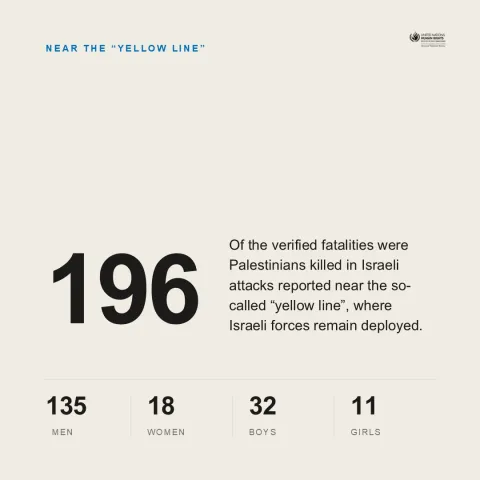
196 Palestinians were killed in Israeli attacks reported near the so-called "yellow line" out of the 629 fatalities verified by UN Human Rights - Palestine since the ceasefire announcement through early April.

Image
196 killings in the vicinity of the so-called yellow line

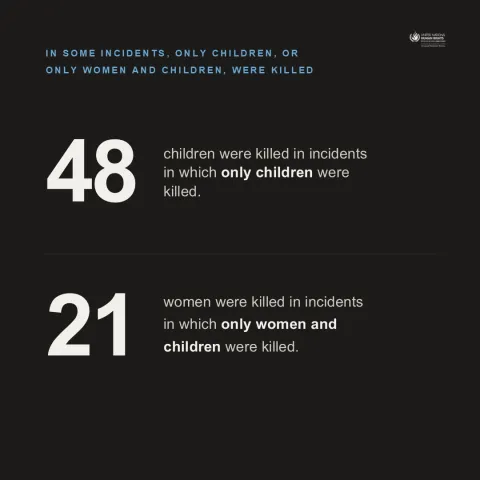
Since the ceasefire announcement in Gaza in October 2025, some incidents only killed children, or only killed women and children. 

Image
48 children killed in attacks whose victims were all children
29 May, 2026

Attacks on Gaza over Eid kill 26, as Israeli forces push deeper into the strip

Attacks on Gaza over Eid kill 26, as Israeli forces push deeper into the stripUN Human Rights in the Occupied Palestinian Territory (OHCHR OPT) condemns the increase in Israeli attacks in Gaza since t...

Attacks on Gaza over Eid kill 26, as Israeli forces push deeper into the strip

UN Human Rights in the Occupied Palestinian Territory (OHCHR OPT) condemns the increase in Israeli attacks in Gaza since the eve of Eid Al Adha on Tuesday, 26 May. At least 26 Palestinians were killed since Tuesday including six women and seven children as Palestinian families prepared to observe Eid amid displacement, deprivation, and insecurity.

Three airstrikes on 26 May killed 12 Palestinians. In the early morning hours, one more 14-year-old girl died of injuries sustained in an Israeli airstrike the day before that also killed a 30-year-old woman and a five-year-old girl according to initial information. Since the announcement of a ceasefire, at least 32 children and eight women have been killed in Israeli attacks in which fatalities were exclusively women and children.

One of the airstrikes on 26 May killed four men in eastern Al Maghazi camp, Middle Gaza, reportedly after they resisted attempts to search their homes by armed gangs allegedly supported by the Israeli military. Another airstrike hit a car in Al Mawasi, Khan Younis, killing two men. The third airstrike struck an apartment in Al Rimal, Gaza City, and killed a newly appointed commander of Hamas’s Al Qassam Brigades together with his wife, his two sons, aged 15 and 22, his daughter, aged 9, and a woman passerby.

On the first day of Eid Al Adha, 27 May, an Israeli airstrike in central Gaza City reportedly killed at least ten: four girls, one boy, three women, and two men allegedly affiliated with Al Qassam Brigades.

Since the announcement of a ceasefire, Israeli forces have killed 922 Palestinians in attacks across Gaza, bringing the total death toll since 7 October 2023 to nearly 73,000.

OHCHR OPT has consistently warned that Israel’s attacks in Gaza violate international humanitarian law’s principles of distinction, proportionality, and precaution in attacks. A recent OHCHR OPT report also concluded that the totality of Israeli conduct in Gaza raises serious concerns about Israel’s compliance with its obligations to prevent acts prohibited under the Genocide Convention.

The Israeli blockade on Gaza is also still depriving Palestinians of necessities, including adequate shelter, essential medicines, and food items. Almost everyone is displaced and concentrated into less than half the land area of Gaza— hemmed in by Israeli ground forces that continue to move west, displacing families and pushing them into a progressively narrower strip of land. In recent days, multiple displacement orders were issued, forcing people out of their shelters. The Israeli Prime Minister announced yesterday that he had directed Israeli forces to expand their deployment to cover 70 per cent of Gaza. The continued contraction of areas available to civilians raises grave concerns about access to humanitarian assistance, and the ability of displaced families to find any meaningful safety.

“Our concerns about the commission of war crimes in Gaza have not stopped,” said Ajith Sunghay, Head of UN Human Rights in the Occupied Palestinian Territory. “It is difficult enough to navigate life in chronic displacement in the ruins of Gaza, under blockade, and after Israeli attacks virtually destroyed every essential system: healthcare, education, food production, law enforcement and civil order. Continuing military attacks on a population living under these conditions is unthinkable.”

23 January, 2026

Gaza: Civilian killings continue after ceasefire

UN Human Rights in the Occupied Palestinian Territory (OPT) is horrified by the continued killing of civilians in Israeli attacks in Gaza including at least 11 Palestinians killed in a series of attac...

UN Human Rights in the Occupied Palestinian Territory (OPT) is horrified by the continued killing of civilians in Israeli attacks in Gaza including at least 11 Palestinians killed in a series of attacks on 21 January, amid a broader pattern of post-ceasefire violence and the enduring effects of two years of devastation.

The 21 January attacks included an Israeli strike on a car which killed three Palestinian journalists near Netzarim area in central Gaza after conducting a photography assignment for the Egyptian Relief Committee. The killing of Anas Ghneim, Abdel Raof Shaat, and Muhammad Salah Qishta brings the number of journalists killed in Israeli attacks since 7 October 2023 to 292, as verified by UN Human Rights in OPT.

Israeli ground forces reportedly opened fire and carried out artillery shelling in three incidents on 21 January in the vicinity of their deployment line, known as the “yellow line”, which remains not clearly marked on the ground. The attacks reportedly killed a 13-year-old boy east of Khan Younis, and three family members including a father and his 13-year-old son in Middle Gaza. Israeli shelling also reportedly killed three Palestinian brothers northeast of Al Bureij camp in Middle Gaza.

Trends documented by UN Human Rights in the OPT since the ceasefire came into effect on 11 October 2025 include the continued killing of civilians in Israeli aerial attacks, shelling, and gunfire across all five governorates of Gaza, including incidents both far from and in the vicinity of the “yellow line”. Overall, 477 Palestinians were reportedly killed in Israeli attacks in Gaza since the ceasefire according to the Palestinian Ministry of Health, most appear to be civilian.

Since the ceasefire until 21 January 2026, UN Human Rights in the OPT recorded the killing of at least 216 Palestinians, including at least 46 children and 28 women, in Israeli attacks far from the so-called “yellow line”, mainly on shelters of internally displaced persons and residential buildings. This included 126 reported attacks by Israeli unmanned aerial vehicles (UAV) across Gaza resulting in the killing of at least 87 Palestinians, including 12 children and seven women.

In the same period, at least 167 Palestinians were reportedly killed in the vicinity of the “yellow line”, including 26 children and 17 women. Repeated Israeli military operations into areas west of the redeployment line have also led to the displacement of civilians and the demolition of residential buildings in those areas.

More civilians are dying due to the dire human-made humanitarian conditions, including at least nine children who died of hypothermia since the ceasefire.

UN Human Rights in the OPT has also recorded at least 80 reported killings of Palestinians by Hamas since the ceasefire, mostly in clashes with rival families and in summary executions. Hamas must respect international human rights law protections of persons under its control and must prevent and repress any violation of these rights committed by its members.

The persistent stream of civilian casualties raises concern that the Israeli military continues to disregard its obligations under international humanitarian law and international human rights law, including the right to life. The killings around the so-called “yellow line” also appear to involve the targeting of civilians not directly participating in hostilities on the sole basis of their proximity to deployment lines, which would constitute a war crime.

“The crisis in Gaza is nowhere near over. People are dying every day, both in Israeli attacks and as a result of continued Israeli restrictions on the entry of humanitarian assistance, in particular shelter, leading to deaths from the cold and under collapsing buildings. Palestinian journalists are killed, and international journalists are still barred from entering Gaza,” said Ajith Sunghay, Head of UN Human Rights in the OPT.

“This is a time for the international community to intensify support and pressure to stop the bloodshed and advance a rights-based approach to recovery and reconstruction.”