UN Human Rights Office

13 November, 2026

Israeli attacks on hospitals in Gaza must end

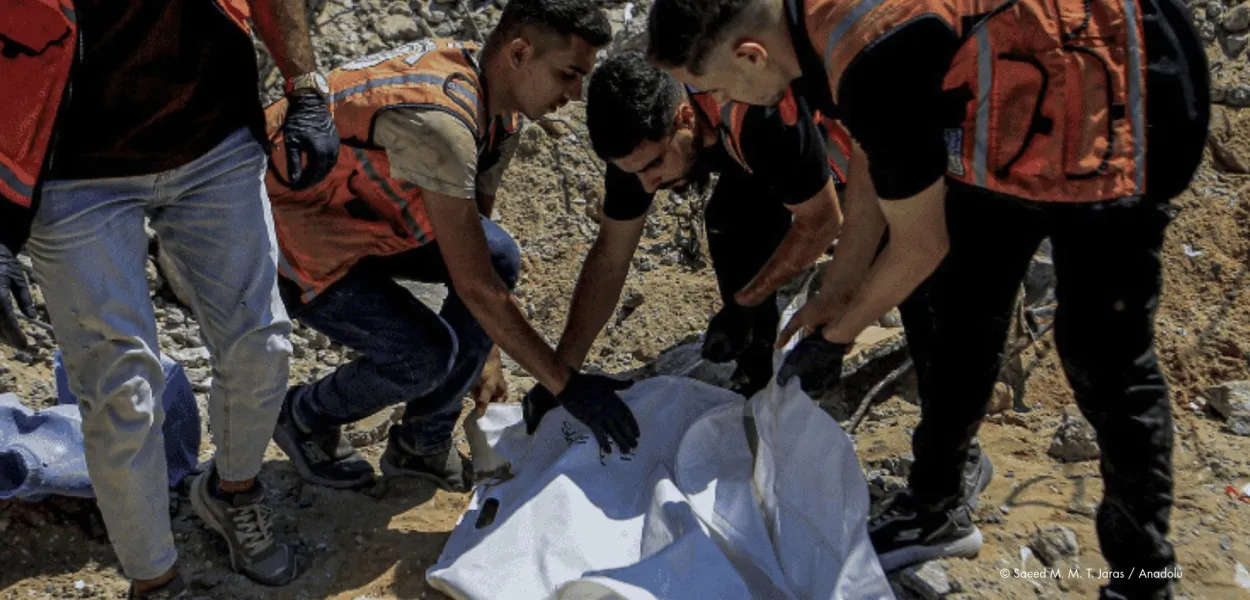
The airstrike on Nasser Hospital on Wednesday night continues a pattern of Israeli attacks on hospitals, killing patients and doctors, and destroying essential medical facilities. The airstrike killed...

The airstrike on Nasser Hospital on Wednesday night continues a pattern of Israeli attacks on hospitals, killing patients and doctors, and destroying essential medical facilities. The airstrike killed six, including a 13-year-old boy and a surgeon.  

Nasser Hospital is one of the few remaining in Gaza after years of relentless Israeli bombardment that left the healthcare system in tatters. According to initial reports, the strike used three missiles, only one of which exploded, leaving civilians, including patients and medical personnel, at risk of unexploded ordnance. Israeli forces last attacked Nasser Hospital in August 2025 when three airstrikes killed 22 Palestinians, including five journalists.  

A 2024 UN Human Rights report examined the pattern which had already destroyed most hospitals in Gaza by then and said the Israeli military “has not provided sufficient information to enable independent substantiation of its statements, when made, that the hospitals, ambulances, and personnel attacked had lost their special protection and constituted military objectives.”  

Direct attacks against hospitals, medical personnel and the sick and wounded amount to a war crime. 


For more information and media requests, please contact:

Mayy El Sheikh– mayy.elsheikh@un.org

30 October, 2026

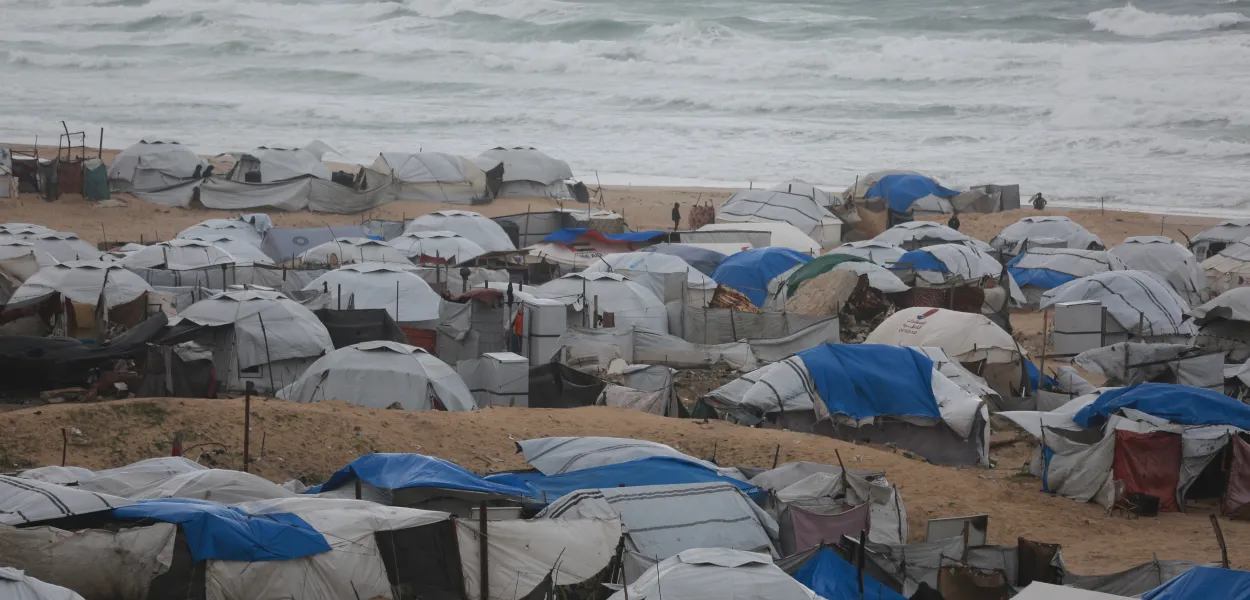
Displacement deepens as Israeli forces push Palestinians into shrinking space

Displacement deepens as Israeli forces push Palestinians into shrinking spaceConcerns of ethnic cleansing in Gaza endure as Israeli forces continue to push Palestinians into an ever-smaller fraction o...

Displacement deepens as Israeli forces push Palestinians into shrinking space

Concerns of ethnic cleansing in Gaza endure as Israeli forces continue to push Palestinians into an ever-smaller fraction of the territory, causing recurrent displacement while destroying the remaining civilian infrastructure and attacking displacement sites.

Palestinians in Gaza are surrounded by Israeli forces from all sides that continue to push them inwards with the stated aim of increasing the Israeli military deployment area to 70% of Gaza’s territory. The relentless contraction of space available to civilians comes with new displacement drivers in areas adjacent to Israeli forces’ deployment lines, commonly known as the “yellow line”.

Over the past two weeks, the UN Human Rights Office in the Occupied Palestinian Territory has documented the westward expansion of Israeli military deployment areas triggering new displacement of Palestinians in Al Shujaiyeh, Gaza City, and in eastern Al Bureij, eastern Deir al Balah and eastern Al Maghazi, Middle Gaza. In Al Shujaiyeh, Israeli forces’ westward push came with at least two Israeli attacks reported on displacement encampments, and detonations of the few buildings left standing in the area with the reported use of explosive robots.

According to reports received by UN Human Rights Office - OPT, an Israeli drone dropped munitions on tents sheltering displaced families at Al Shujaiyeh junction near the so-called yellow line on 25 October, setting tents on fire burnt for nearly five hours. The Palestinian Ministry of Public Works and Housing in Gaza said the fire displaced 200 families comprising 800 people, most of them women, children and elderly persons.

“The nightmare of displacement in Gaza is both acute and chronic,” said Ajith Sunghay, Head of UN Human Rights - OPT. “Those displaced before the announcement of a ceasefire have little to no prospect of return to the areas they fled, most of which are inaccessible because they fall beyond the so-called yellow line. And they continue to be displaced again and again.”

As an occupying power, Israel must cease the forcible transfer of Palestinians within the Gaza strip, a war crime that may also amount to a crime against humanity. Israel must facilitate the Palestinians’ safe and dignified return to their homes and the areas they fled. Instead, Israeli military operations have displaced nearly everyone in Gaza multiple times, laid to waste the infrastructure needed to support civilian life, and damaged or destroyed over 80% of all buildings and structures according to the United Nations Satellite Centre.

Today, Israeli forces appear to treat the yellow line as a kill zone, preventing Palestinians from returning to what is left of their homes on the other side. The displacement crisis is exacerbated by the restrictions imposed by Israeli authorities on the entry of shelter-related humanitarian assistance. And Israeli bombardment never ceased, even a year after the announcement of a ceasefire, while Palestinian families remained trapped in inadequate shelters, struggling to secure their most basic needs and deprived of their rights.

“There must be an end to this suffering. This is the fourth year of displacement for most Palestinians in Gaza, the fourth winter in tents too flimsy to withstand the rain, and they are still under fire through it all,” said Sunghay. “Let this be the last.”

21 October, 2026

Urgent action needed to protect Palestinian olive harvest

Urgent action needed to protect Palestinian olive harvestUN Human Rights - Palestine calls on all States and donors to take urgent action, beyond condemnations and statements, to press for the protect...

Urgent action needed to protect Palestinian olive harvest

UN Human Rights - Palestine calls on all States and donors to take urgent action, beyond condemnations and statements, to press for the protection of Palestinian communities as the olive harvest season gets off to an ominous start.

At least 160 Israeli settler attacks related to the olive harvest have been recorded in the occupied West Bank in the first two weeks of October, according to the UN Office for the Coordination of Humanitarian Affairs (OCHA), often under the protection or with the participation of Israeli forces. Settlers continued the attacks over the past few days, including assaulting an international journalist while covering the harvest, and attacking European diplomatic representatives on a visit to a Palestinian community shortly after the start of the harvest season. Settlers attacking the olive harvest have used live ammunition and arson, destroyed olive trees and groves including ancient trees, damaged Palestinian property, and stolen harvested olives and agricultural equipment.

In addition to the attacks by Israeli forces and settlers, thousands of Palestinian farmers are unable to access their olive trees for the harvest due to severe Israeli movement restrictions that dramatically worsened over the past three years. In the meantime, illegally present settlers are allowed to access Palestinians’ lands and harvest their crops.

“Palestinians often say that olive trees are symbolic of their existence as a group and their connection to the land. Attacks on the olive harvest can’t be separated from the pervasive Israeli assault on Palestinians’ existence as a group connected to this land,” said Ajith Sunghay, Head of UN Human Rights – OPT. “This is yet another tool of displacement and dispossession, adding to the suffering of communities whose rights are under attack on a daily basis.”

The Palestinian Ministry of Agriculture estimates the losses of the Palestinian olive sector at USD 157 million since October 2023 in the West Bank in Gaza. The Ministry said 90% of Gaza’s two million olive trees have been destroyed since October 2023. In the West Bank, 286,000 olive trees have been damaged through the end of September 2026 including 25,000 trees in 2023, 70,000 trees in 2024, 91,000 trees in 2025, and 100,000 trees in 2026 even before the start of this year’s olive harvest season.

Sunghay reiterated the call to action issued ahead of the season by the Protection Cluster led by UN Human Rights – Palestine — a network of over 100 international and national organizations that focuses on assessing and responding to the protection risks and needs of the most vulnerable Palestinians. The Protection Cluster urged member states to increase international and diplomatic field presence and engagement in high-risk communities, particularly during critical harvesting periods, complementing existing protective presence arrangements and focusing attention on locations facing recurrent violence and access restrictions.
Member states must exercise pressure on Israel to:

  • Ensure Palestinians’ safe, timely, and meaningful access to their agricultural land.
  • Protect Palestinian farmers from violence, intimidation, and expulsion.
  • Protect agricultural land, crops, and productive assets.
  • Ensure access for humanitarian and emergency responders.
  • Strengthen accountability and provide legal remedies.
  • End settlement expansion and related measures that contribute to violence, dispossession, and displacement.

The Protection Cluster also called upon donors to provide timely, adequate, and flexible funding for protective presence, community-based protection, emergency preparedness, legal assistance and food security and livelihoods interventions, enabling partners to respond rapidly as access conditions and needs change.

Read the joint Protection Cluster and Food Security Sector snapshot report to learn more about the protection risks facing olive harvest farmers, the hotspots of prioritized, at-risk areas related to the harvest season, and the recommendations of Palestinian communities towards more safety: Protection And Food Security and Livelihoods | West Bank Olive Harvest 2026 | Preparatory Workshop Outcomes - occupied Palestinian territory | ReliefWeb

10 October, 2026

One year after ceasefire announcement, killings continue across Gaza

A year after the announcement of a ceasefire in Gaza, Palestinians are still living under constant Israeli fire in attacks both near and far from the so-called “yellow line” that raise serious concern...

A year after the announcement of a ceasefire in Gaza, Palestinians are still living under constant Israeli fire in attacks both near and far from the so-called “yellow line” that raise serious concerns about continued crimes under international law, including war crimes.

“This is not life; this is endless torment with no end in sight. Human life has no value anymore,” said one father of three in Gaza. “There is not a single thing I can think of to ensure my children will survive from one minute to the next. We are constantly at the mercy of a random bullet, shelling, or an aerial attack. Sometimes it feels like they are playing games with our lives.”

Throughout the past year, Israeli attacks never ceased, killing and injuring Palestinians and causing recurrent displacement across Gaza. Over 1,400 Palestinians have been killed in Gaza according to the Palestinian Ministry of Health since the announcement of a ceasefire on 10 October 2025. UN Human Rights – OPT has so far verified1,076 conflict-related deaths between the ceasefire announcement and the end of July 2026, including 268 children, 126 women, and 682 men — women and children making up 37 per cent of all verified fatalities.

Since 7 October 2023, Israeli forces have killed over 20,000 children in Gaza, according to the Palestinian Ministry of Health. Since the announcement of a ceasefire in October 2025, UN Human Rights – OPT has verified the killing of 64 children in reported Israeli attacks that killed only children and no adults. This is in addition to 30 women and 10 more children killed in reported Israeli attacks in which all those killed were women or women and children with no men fatalities. The total proportion of civilian fatalities is likely much higher, as this number does not take into account all the civilian men killed in Gaza.
This pattern raises serious concerns that Israel is directing attacks against civilians not directly participating in hostilities — a war crime.

“Violence of this magnitude is outrageous at any time. To record it during a supposed ceasefire is simply unfathomable,” said Ajith Sunghay, Head of UN Human Rights – OPT. “Palestinians have endured these attacks while trapped within an ever-shrinking part of Gaza’s territory, surrounded from all sides by Israeli forces, and struggling to secure even the most basic necessities of life.”

The Israeli military has consistently expanded its deployment areas starting from nearly 53 per cent of Gaza’s territory at the time of the ceasefire announcement, with the objective of reaching 70 per cent of the territory as publicly stated by the Israeli Prime Minister. The boundary of these deployment areas has been commonly known as the “yellow line”, but monitoring over the past year demonstrates there is no single, identifiable line. Instead, Israeli forces continuously moved inwards, along ever-shifting lines not known to Palestinians, with frequent incursions into Palestinian communities.

While most verified fatalities have been recorded in reported Israeli attacks far away from Israeli military deployment areas, the conduct of Israeli forces around the so-called yellow lines raises serious concerns that it is being treated as a kill zone where lethal force is arbitrarily used.

A two-year-old boy was shot and killed in the early morning hours of 14 June 2026 in the arms of his father on their way to visit an aunt in Wadi Al Salqa, eastern Deir Al Balah. They were on a road approximately 150-200 meters west of the so-called “yellow line”, used routinely by Palestinians before the incident. On the way, the father saw a group of Israeli soldiers stationed at the entrance of an abandoned house in an apparent incursion west of the line. The soldiers were only 10 meters away, he told UN Human Rights – OPT, and they started shooting immediately.

“I saw my boy’s left eye come out of his face,” the father said. “As I realized a bullet penetrated his back and came out from his eye, another bullet struck me in the calf. I saw a bone fragment shoot out of my leg and land on the ground in front of me. I fell to the ground. My son was gasping for his last breath. I tightened my arms around him.”

The boy was taken away by soldiers, his father said, wrapped in a plastic sheet, “no longer moving or making any sounds”. The father was then stripped down, blindfolded, and dragged east, crossing the yellow line. Israeli soldiers moved him from vehicle to vehicle and from one site to another until he passed out from the bleeding around midnight.

“I woke up in Al Aqsa Martyrs Hospital in Deir Al Balah. I was informed that my son’s body was handed over as well. I do not know how and when we got there,” the father said.

Since the announcement of a ceasefire in October 2025, as of the end of July 2026, 331 Palestinians have been killed in the vicinity of the so-called yellow line as verified by UN Human Rights – OPT, including 66 children, 27 women, and 238 men. In many verified cases, there was no information to suggest the victims were posing any threat to Israeli forces. Many were carrying out ordinary civilian activities at the time of their killing, and some were killed while inside their tents. Targeting and killing civilians who are not directly participating in hostilities is a war crime regardless of their location or proximity to military deployment areas.


Sunghay reiterated UN Human Rights’ calls on third States to implement their duty to exercise influence over Israel to stop its violations of international law in Gaza, including by ceasing the supply of weapons and munitions facilitating serious violations of international law, and supporting the work of international accountability mechanisms.

“Accountability is not an afterthought or part of a distant future of recovery. It is a cornerstone of deterrence and non-recurrence. And it is already overdue,” he said.
30 September, 2026

Remarks on the conditions of Palestinian detainees in Israeli custody

Remarks on the conditions of Palestinian detainees in Israeli custodyAs delivered by Neil Tobin, Deputy Head of UN Human Rights - Palestine during a side event on the margins of the Human Rights Counc...

Remarks on the conditions of Palestinian detainees in Israeli custody

As delivered by Neil Tobin, Deputy Head of UN Human Rights - Palestine during a side event on the margins of the Human Rights Council 63rd session.
The reality for Palestinian detainees is horrific. As of September 2026, Israel held 9,329 Palestinian prisoners, among them about one third are under administrative detention, and 1,393 Palestinians, most of them from Gaza, detained as “unlawful combatants”, also a form of administrative detention.

The routine use of administrative detention – on security grounds without criminal charge or trial – continues to expose Palestinian detainees to prolonged arbitrary deprivation of liberty, torture and other ill-treatment and enforced disappearance. Detainees continue to face restrictions on access to legal counsel, contact with family members, independent medical examinations, and effective mechanisms through which to report abuse and seek redress.

This is not new. For years, the UN Human Rights Office in the Occupied Palestinian Territory has raised concerns about the arbitrary detention, torture and ill-treatment of Palestinian detainees, including high numbers of children, especially boys, in detention. But the situation has only deteriorated since October 2023.

There is no starker indication of the widespread and routine use of torture and other ill-treatment by the Israeli authorities against Palestinian detainees than the numbers of deaths in Israeli custody. The UN Human Rights Office in the Occupied Palestinian Territory has verified that, since October 2023 at least 92 Palestinians have died in Israeli custody. One of the 92 Palestinians includes 17-year-old Walid Al Basha, who died in an Israeli prison on 22 March 2025. The autopsy showed that Al Basha, who was reportedly in good health when arrested in September 2024, displayed severe signs of starvation at the time of his death.

The Israeli authorities have announced investigations into only a handful of such deaths, with no outcomes known to date. Unless and until each death is the subject of an investigation that meets international standards and disproves allegations of wrongdoing, Israel remains responsible for every single death in custody.

The patterns described by Palestinian detainees in our interviews with them have been consistent across different Israeli detention facilities, and regardless of the time of their detention or release, indicating that the use of torture and ill-treatment is widespread and systematic. Sexual and gender-based violence against Palestinian men and women is also extensive in Israel’s detention system.

The UN Human Rights Office in the Occupied Palestinian Territory also has concerns of allegations of arbitrary detention, ill-treatment and torture by Palestinian Security forces. The Office continues its open dialogue with the Government of the State of Palestine to ensure that allegations of such violations are promptly, impartially and independently investigated and perpetrators are held accountable.

Meanwhile, Israeli authorities have systematically dismantled internationally recognised safeguards against torture and other ill-treatment. Among the most significant of these safeguards is regular, confidential and unhindered access by independent monitoring bodies to places of detention, including by the International Committee of the Red Cross.

We call for immediate, regular and unhindered access by independent monitoring bodies, including the ICRC, with confidential access to detainees.

We continue to call on Israeli authorities to release all Palestinians who have been arbitrarily detained and call on them to independently investigate all deaths in detention.
We urge Israel to end torture and other ill-treatment immediately and ensure adequate food, medical care, access to lawyers and family contact.
And we urge Israel to reform legislation, policies and practices to bring these fully into compliance with Israel’s obligations under international law.
24 September, 2026

Israel must immediately halt demolitions in Msafer Yatta

Israel must immediately halt demolitions in Msafer YattaIsrael must immediately halt the mass destruction of Palestinian villages in Msafer Yatta, South Hebron Hills, and the forcible transfer of the ...

Israel must immediately halt demolitions in Msafer Yatta

Israel must immediately halt the mass destruction of Palestinian villages in Msafer Yatta, South Hebron Hills, and the forcible transfer of the residents, compounding fears of ethnic cleansing in the occupied West Bank.

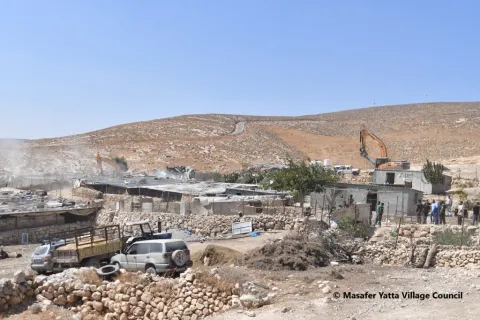
Image
Destruction in Msafer Yatta

On 23 September, Israeli forces with Israeli Civil Administration bulldozers demolished dozens of Palestinian structures including homes, agricultural infrastructure as well as water tanks and solar panels in the village of Jinba. Three additional villages in Msafer Yatta have already been destroyed, almost entirely, in September 2026. Overall, there are 12 villages in Msafer Yatta housing over 1,100 Palestinians, most of whom have owned and lived on the land for generations.

“Our homes were torn down today, wiped from the face of the earth,” one resident of Jinba told UN Human Rights – OPT, “This isn’t the demolition of rocks, this is the destruction of years of hard work and memories.”

Israeli demolitions of Palestinian homes and infrastructure have so far displaced 1,500 people in the occupied West Bank in 2026 according to OCHA — over a third of all 4,300 forcibly displaced Palestinians this year.

“The forcible transfer of a civilian population from their land by an occupying power is a war crime. The case of Msafer Yatta also raises serious concerns of deepening Israel’s violation of international law’s prohibition of racial segregation and apartheid,” said Ajith Sunghay, the Head of UN Human Rights – OPT.

In the 1980s, Israel declared some 30,000 dunums of Msafer Yatta where Palestinians had lived long before 1967 as “Firing Zone 918”. Waves of Israeli eviction and demolition orders have continued in the area since then with Israeli authorities consistently citing the requirement of military training in the designated firing zone.

However, Israeli settlers live in at least 11 outposts within Firing Zone 918 without contestation, most of which were created after October 2023. All settlements are unlawful under international law, but outposts are illegal even under Israeli law. The Israeli Government has retroactively regularized at least one of the outposts partially located in Firing Zone 918 in February 2023.

“Israel’s toolbox for Palestinian erasure in the occupied West Bank is vast: demolitions, evictions, settlement expansion, settler violence, arbitrary zoning, land confiscations, appropriation of heritage sites, raids, devastating violence,” Sunghay said, “But it is all happening under the same banner — Israel consolidating its annexation of as much Palestinian territory as possible, with as few Palestinians as possible, as fast as possible.”

“Member States must act now while they still can, to halt this project and ensure Palestinians are able to exercise their right to self-determination,” he added.On 23 September, Israeli forces with Israeli Civil Administration bulldozers demolished dozens of Palestinian structures including homes, agricultural infrastructure as well as water tanks and solar panels in the village of Khirbet Jinba. Three additional villages in Msafer Yatta have already been destroyed, almost entirely, in September 2026. Overall, there are 12 villages in Msafer Yatta housing over 1,100 Palestinians, most of whom have owned and lived on the land for generations.

18 September, 2026

Ninety two Palestinian deaths in Israeli custody since October 2023

On 16 September, 21-year-old Mutaz Nizam al-Atrash died in Israeli custody, making him the 92nd Palestinian detainee to die while detained by Israel since October 2023. Israeli authorities have refuse...

On 16 September, 21-year-old Mutaz Nizam al-Atrash died in Israeli custody, making him the 92nd Palestinian detainee to die while detained by Israel since October 2023. Israeli authorities have refused to hand over most of the bodies to their families.

In another case, 35-year-old Dana Jouda spent most of her pregnancy in Israeli custody. According to information gathered by 
UN Human Rights - Palestine, the only accommodation for her pregnancy was an exemption from lying face down when guards raided her cell. On 14 September, she went into pre-term labour and delivered a baby girl by Caesarean section. Both her legs and one hand were shackled to the operating table during the procedure, according to available information.

Documentation over the years has shown torture and ill-treatment of Palestinian detainees in Israeli detention facilities to be widespread and systematic, and carried out with impunity.

Like thousands of Palestinians, Mutaz and Dana were held in prolonged administrative detention without charge or trial. Dana was released the day after her operation without charge.