UN Human Rights Office

15 September, 2026

Remarks to the press on missing persons in Gaza

Remarks to the press on missing persons in GazaAjith Sunghay – Head of the UN Human Rights Office in the Occupied Palestinian TerritoryHuman remains believed to belong to 96 people from three Palestin...

Remarks to the press on missing persons in Gaza

Ajith Sunghay – Head of the UN Human Rights Office in the Occupied Palestinian Territory

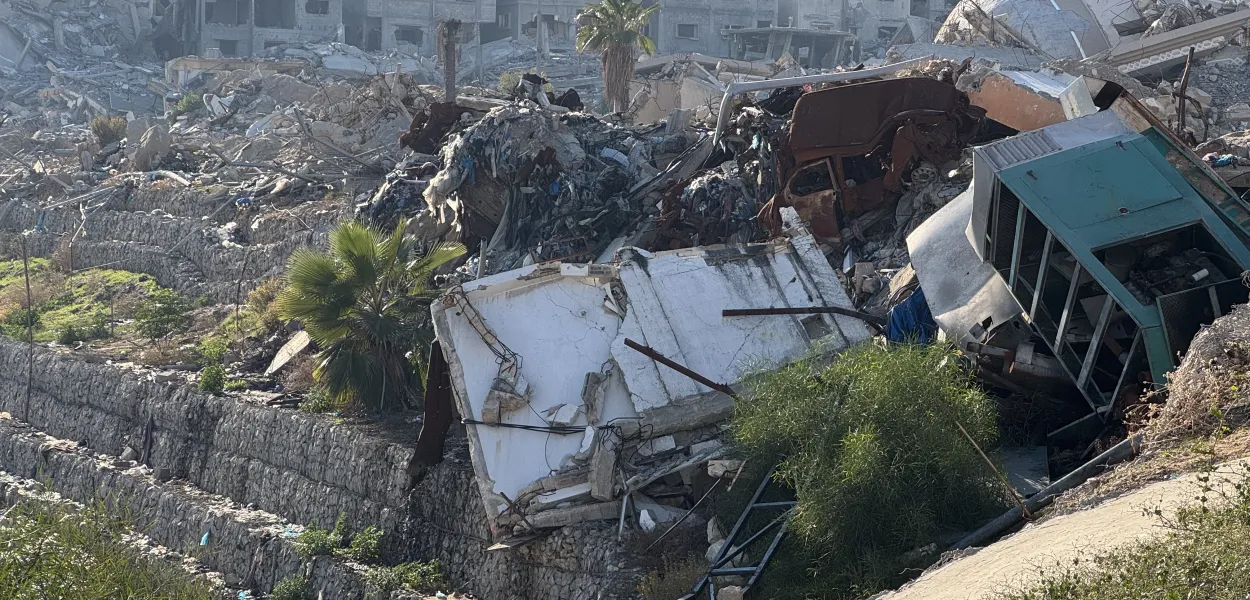
Human remains believed to belong to 96 people from three Palestinian families have been recovered from under the rubble in Gaza City this month, around half were women and children.

One family, the Malakas, had lost 72 members in Israeli airstrikes on the family homes in November 2023. Only three bodies were recovered at the time. Remains believed to belong to 55 more members of the family were among those recovered this month. The remaining 14 family members are still missing beneath the rubble. Like many in Gaza, they may never be recovered. The sheer explosive power of heavy munitions sometimes left no recoverable remains. And it is increasingly difficult to distinguish rubble from remains as the years pass.

A survivor of the attack on the Malaka family homes told us that, for nearly three years, he felt “buried” beneath layers of grief and pain: “The pain of knowing they still lie in ruins, the pain of being unable to recover and bury them, and the ultimate pain of losing them.”

It is estimated that at least 8,000 bodies remain buried under the rubble across the strip. Palestinian Civil Defence teams have recovered over 800 bodies since the announcement of a ceasefire in October 2025 despite severe shortages of equipment, fuel, and personnel. At this pace, completing the recovery of the remaining bodies will take at least 10 more years. Even longer when accounting for the time needed to identify bodies, if it is ever possible.

It’s Israel’s obligation under international law to do everything possible to ensure these remains are found, identified, and buried with dignity in accordance with the families’ religious and cultural beliefs. Instead, the collective impact of Israel’s conduct is making any systematic, large-scale search, recovery, and identification effort nearly impossible.

Some families, like the Malakas, have been unable to recover the remains of their loved ones due to the lack of resources. Israeli authorities have been blocking the entry of the heavy machinery and trained personnel needed for large-scale recovery. At present, Palestinian Civil Defence teams report having only one excavator left and, at times, being forced to dig through rubble with their bare hands.

Some families in Gaza cannot reach the areas where their missing family members were killed to search for their remains. Israeli forces surround the Palestinian population in Gaza from all sides along the constantly shifting, so-called “yellow line”. Most of the territory of Gaza is now beyond the yellow line — inaccessible to Palestinians, including Civil Defence teams and families of missing persons. Reports are also mounting about Israeli soldiers removing and crushing rubble there — rubble laden with people’s remains.

Even when bodies are recovered, families are often unable to identify them. Israel has been blocking the entry of forensic and identification tools such as DNA and fingerprint kits, leaving families to identify remains by physical characteristics, or by guessing based on the location of the recovery.

If a natural disaster caused this scale of crisis, international mechanisms, deployment of specialized search and forensic teams, and massive resources to support large-scale operations of search, recovery, and identification would all be triggered. Yet the needs here, despite the human causes this time, are just as great, and I would urge similar kind of joined-up response here.
This predictably risks the loss of evidence needed to ensure every individual responsible for atrocity crimes is held to account. It also prolongs the anguish of thousands of families already living in perpetual fear, insecurity, and want. They have a right to know the fates of their children, parents, siblings, and cousins. They have a right to mourn them with dignity. And they have a right to justice.


Also read the statement by Volker Türk: "Türk says recovery of remains in Gaza three years later adds to Palestinian trauma", on missing persons in Gaza: https://www.ohchr.org/en/press-releases/2026/09/turk-says-recovery-remains-gaza-three-years-later-adds-palestinian-trauma
 

3 September, 2026

Israeli forces killed two boys in Al Mughayyir

Israeli forces shot and killed two Palestinian boys,16-year-old Khalil Shihadeh and 17-year-old Omar Al Nassaan, in Al Mughayyir during a reported settler attack. Israeli forces and settlers have now ...

Israeli forces shot and killed two Palestinian boys,16-year-old Khalil Shihadeh and 17-year-old Omar Al Nassaan, in Al Mughayyir during a reported settler attack. Israeli forces and settlers have now killed 9 Palestinians in the town since December 2024, including 5 boys.  

Surrounded by 8 settler outposts, Al Mughayyir has been a target for incessant settler and state violence to force Palestinian residents to leave. This included more than 50 settler attacks in 2026 alone, according to OCHA, with an average of 7 attacks per month, with the acquiescence, support, and participation of Israeli forces. 

While outposts expand around Al Mughayyir, settler and state violence has already purged entire surrounding communities of Palestinians, including the villages of Ein ar Rashash, Ras al Tin, and Ein Samya. 

Israel must meet its international law obligation to end its unlawful presence and evacuate all settlers from the occupied West Bank.

3 September, 2026

Bloodshed in Gaza must come to an end

Almost a year since a ceasefire was announced and nowhere and nobody in Gaza is safe. Twenty-four Palestinians have been killed in Israeli attacks in the five days between 28 August and 1 September, i...

Almost a year since a ceasefire was announced and nowhere and nobody in Gaza is safe. Twenty-four Palestinians have been killed in Israeli attacks in the five days between 28 August and 1 September, including four children and a woman. Twenty-one were killed in airstrikes.

Palestinian armed elements’ operations with the reported support of Israeli forces are causing civilian harm. On 1 September, according to initial information, the Israeli military conducted a raid into Al-Katiba area in West Gaza city accompanied by Palestinian armed elements under the cover of multiple airstrikes, killing a 3-year-old girl and a 13-year-old boy, and a 31-year-old man.
The fourth victim was a 49-year-old woman, the wife of 51-year-old Moein Al Arbeed, a colonel with the de-facto Internal Security Agency who has been detained by Israeli forces during the raid.

Israel’s stated pursuit of individuals that it alleges to be lawful targets does not suspend its international humanitarian law or international human rights law obligations, including in relation to Palestinians’ right to life. Nor does it justify the daily terror Palestinians are subjected to in Gaza. This bloodshed must finally come to an end. There must be justice and accountability for all the unlawful killings and other violations in Gaza.

26 August, 2026

Statement by Israeli military official raises concerns

The IDF Chief of the General Staff in the Gaza Strip has stated that: “The pursuit of the terrorists from October 7th continues – everyone who took part in the massacre will live on the run until they...

The IDF Chief of the General Staff in the Gaza Strip has stated that: “The pursuit of the terrorists from October 7th continues – everyone who took part in the massacre will live on the run until they are eliminated”. Allegations of criminal conduct must be addressed in accordance with international human rights standards, through independent, impartial, and lawful processes that fully respect due process guarantees and the presumption of innocence.

The targeted killing of persons on the basis of allegations of criminal conduct amounts to extrajudicial executions and a war crime. Anyone ordering, soliciting or encouraging such acts is criminally liable under international law.

21 August, 2026

Gaza: Civilians Continue to Pay the Price as Deadly Attacks Persist

Gaza: Civilians Continue to Pay the Price as Deadly Attacks PersistOn 18 and 19 August alone, at least 17 Palestinians, including children and women, were reportedly killed in Israeli attacks across G...

Gaza: Civilians Continue to Pay the Price as Deadly Attacks Persist

On 18 and 19 August alone, at least 17 Palestinians, including children and women, were reportedly killed in Israeli attacks across Gaza. Among the dead was a 13-year-old boy and his father killed in a strike on a seaside café, in addition to a 13-year-old girl killed in an attack on a police facility in Gaza City.

These incidents are a stark reminder that, despite occasional drops in the number of reported attacks, civilians throughout Gaza remain exposed to persistent, unpredictable, lethal harm.

Between 13 and 19 August, at least 22 Palestinians were reportedly killed in Israeli military attacks across Gaza. Under international humanitarian law, attacks directed at civilians, as well as indiscriminate and disproportionate attacks, are prohibited. Such attacks may amount to war crimes and other atrocity crimes.

The continuing pattern of attacks against police personnel and facilities in Gaza is alarming. UN Human Rights recorded an attack on 19 August on the Municipal Police headquarters in Gaza City, killing at least nine Palestinians, including a 13-year-old girl and eight police officers. Among the officers killed was the Director of the Women's Police in Gaza Governorate, Fatena Al-Sahar. The strike occurred in a densely populated area hosting large numbers of internally displaced people, injuring other civilians, including women and children.

Between January and August 2026, UN Human Rights has recorded at least 18 Israeli attacks against police personnel in Gaza, resulting in the killing of at least 77 Palestinians, including 57 police personnel, six children and four women. Six of these attacks were carried out since June.

Under international humanitarian law, police personnel are civilians protected against attacks. Targeting them is a war crime. They may lose this protection only if and for such time as they directly participate in hostilities. As the occupying Power, Israel has the obligation to ensure public order and safety. Such attacks further dismantle civilian law enforcement structures in Gaza and undermine protection to communities already subjected to wide-ranging human rights violations.

The concentration of casualties in these attacks, in densely populated civilian areas, including a café, a tent sheltering internally displaced people, a civilian vehicle, and police headquarters surrounded by displaced families, is part of a wider pattern of indiscriminate and disproportionate Israeli attacks against Palestinians documented by UN Human Rights since October 2023.

"It is hard to see any ‘military necessity’ of Israel’s ongoing attacks across a decimated landscape, which continue to kill and maim civilians, including children and police personnel,” said Ajith Sunghay, head of UN Human Rights’ office in Palestine. “The right to life is the foundational right for all. But it seems in Gaza, there is no respect left for human rights as death, injury and destruction continue day after day.”

19 August, 2026

Latest comment from Israel Government Minister beyond the bounds of humanity

Latest comment from Israel Government Minister beyond the bounds of humanity The latest comments by Israel’s Minister of National Security, Itamar Ben-Gvir, advocating and inciting violence amoun...

Latest comment from Israel Government Minister beyond the bounds of humanity 

The latest comments by Israel’s Minister of National Security, Itamar Ben-Gvir, advocating and inciting violence amounting to atrocity crimes, are yet another example of the utter contempt for international humanitarian law, international human rights law and the basic tenets of humanity displayed by senior Israeli Government officials.  

These dehumanising remarks follow the devastating human toll of 73,400 Palestinians killed and 174,312 injured in Gaza since 7 October 2023, according to the Palestinian Health Ministry, alongside 1,123 Palestinians killed in the occupied West Bank.

In January 2024, the International Court of Justice handed down binding provisional measures requiring Israel to “take all measures within its power to prevent and punish the direct and public incitement to commit genocide in relation to members of the Palestinian group in the Gaza Strip”.

Today, in the wake of the utter destruction of Gaza and unrelenting Israeli settler attacks and forced displacement of Palestinians in the West Bank, statements from senior Israeli officials to justify and encourage further unlawful mass killings of Palestinians continue unabated. It is beyond the bounds of humanity.

The Israeli Government must promptly and unequivocally condemn such incitement to violence, investigate instances of incitement, particularly from senior government officials, and hold those responsible to account. Third States must also take steps to fulfil their obligations to prevent and punish atrocity crimes.  

13 August, 2026

Settler encroachments and attacks on Palestinian homes are beyond a boiling point

Settler encroachments and attacks on Palestinian homes are beyond a boiling pointIsraeli authorities must immediately remove settlers who are violently displacing thousands of Palestinians, unlawfully...

Settler encroachments and attacks on Palestinian homes are beyond a boiling point

Israeli authorities must immediately remove settlers who are violently displacing thousands of Palestinians, unlawfully grabbing Palestinian land and expanding settlements.

Since the establishment of an Israeli settler outpost near Qusra, a Palestinian town located in Nablus Governorate in Area B of the occupied West Bank in November 2025, Israeli settlers have reportedly taken control of the area west of the town, located in Area B. During this time, Palestinians living in Qusra have endured increasingly frequent attacks by settlers, including home invasions, physical assaults, acts of vandalism, theft and arson, including against a local mosque.

In an emblematic case of settler violence, in July, Israeli settlers from an outpost located in the Ras al Ein area of Qusra cut the water and electricity supply to three Palestinian homes located nearby. Then, on 9 August, the settlers closed all the gates and entrances leading to these Palestinian homes and set up a tent between the houses, refusing to allow anyone to enter or leave the area. This has resulted in three Palestinian households, comprising some 15 people including at least two children, being trapped inside their homes in a state of terror, unable to attend to their basic needs and without access to water or electricity.

The families reported that they requested Israeli security forces present at the site to intervene, but to no avail. Instead, Israeli security forces seem to have blocked medics, solidarity activists and journalists from reaching the families. In a sign that could indicate collusion between the ISF and settlers, video footage shows soldiers praying together with settlers at the location. On 12 August, soldiers eventually dismantled the settlers’ tent without removing the settlers who, as of 13 August, are still surrounding the homes.

These criminal actions by the settlers, supported or acquiesced to by Israel, the Occupying Power, are making life unbearable for these Palestinian families, and are clearly aimed at forcing them to leave their homes and land. Time is running out for these three families before they are forcibly displaced.

The International Court of Justice is clear that all Israeli settlements are illegal and that Israel is obligated to cease all settlement activities, evacuate all settlers, including those terrorizing Qusra and Jalud, and bring to an end its unlawful presence in the West Bank. In the meantime, Israel must comply with its obligations under the laws of occupation to ensure the security of the local Palestinian population, which includes preventing attacks by Israeli settlers unlawfully present in the occupied West Bank, investigating such attacks and ensuring accountability of those found responsible for conducting, supporting or tolerating these attacks, including through the imposition of sentences commensurate to the abuses and violations.

12 August, 2026

UN Human Rights Office in the Occupied Palestinian Territory (OPT) concerned over Israel’s ill-treatment, violence and confiscation of belongings from Gaza returnees

UN Human Rights - Palestine concerned over Israel’s ill-treatment, violence and confiscation of belongings from Gaza returnees UN Human Rights - Palestine is concerned about the increasing number...

UN Human Rights - Palestine concerned over Israel’s ill-treatment, violence and confiscation of belongings from Gaza returnees 

UN Human Rights - Palestine is concerned about the increasing number of reports by Palestinians returning to Gaza that they have been subjected to physical violence, threats, degrading treatment, and intrusive searches by Israeli soldiers, as well as other armed individuals acting under the authority of Israel, at Kerem Abu Salem crossing point, and previously at Rafah crossing point. There are also widespread reports of the confiscation of medicines, medical supplies, identity documents, educational certificates, money, and other personal belongings, with no process for their recovery.  

Between 7 July and 4 August 2026, hundreds of returnees described prolonged and exhausting journeys. In just one day, in July, 54 of 92 returnees reported that some or all of their personal belongings had been confiscated, including medicines and assistive devices.

In early August, an older man reported that, after objecting to money being missing from his belongings, Israel soldiers beat and handcuffed him, dragged him along the ground, detained him in a small room, and then transferred him to a bus.  

In another instance, there were reports of unnecessary intrusive searches and degrading treatment. Two women returning together reported that they were taken separately into closed areas and subjected to an intrusive body search by a female Israeli soldier, being required to remove their clothes while being filmed by a surveillance camera, after a metal necklace worn by one of them had triggered a security alarm.  

These reports are consistent with concerns documented during earlier crossings, where returnees described verbal abuse, intimidation, interrogations, violent handling and theft from their luggage.

Children face additional vulnerabilities. A four-year-old girl arrived in Gaza alone after her father was prevented from returning to Gaza. Upon her arrival, humanitarian partners had to initiate family tracing to help reunite her with her mother and uncle.  

“These violations we are seeing against Palestinians returning to Gaza are part of a broader pattern of violations and dehumanization, and are discouraging people from returning,” said Ajith Sunghay, Head of UN Human Rights in the Occupied Palestinian Territory. “These are vulnerable people returning to their occupied land that has been devastated by years of Israeli bombardment and starved of life’s basic essentials. And now they are having to endure this on their return? It is simply abhorrent.”    

12 August, 2026

International Youth Day 2026

On International Youth Day, UN Human Rights - Palestine stands with Palestinian youth, whose lives and futures continue to be profoundly shaped by Israel’s prolonged occupation. Young Palestinians fac...

On International Youth Day, UN Human Rights - Palestine stands with Palestinian youth, whose lives and futures continue to be profoundly shaped by Israel’s prolonged occupation. Young Palestinians face restrictions on their freedom of movement, access to education and employment, and ability to participate fully in public life.