30 October, 2026

Displacement deepens as Israeli forces push Palestinians into shrinking space

Displacement deepens as Israeli forces push Palestinians into shrinking spaceConcerns of ethnic cleansing in Gaza endure as Israeli forces continue to push Palestinians into an ever-smaller fraction o...

Displacement deepens as Israeli forces push Palestinians into shrinking space

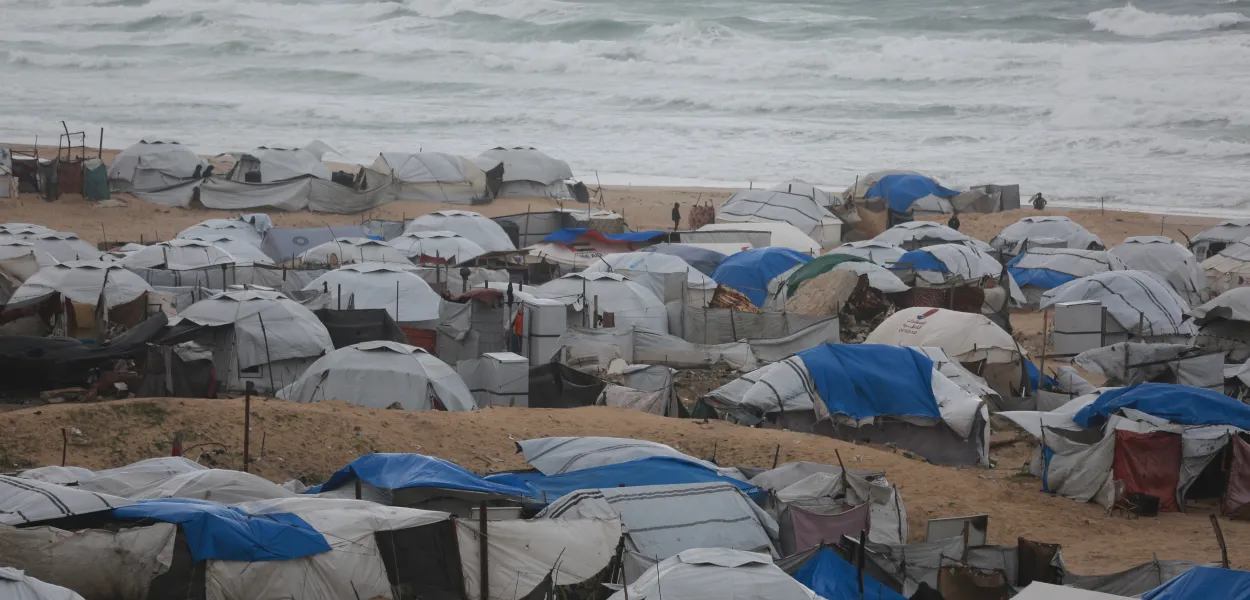
Concerns of ethnic cleansing in Gaza endure as Israeli forces continue to push Palestinians into an ever-smaller fraction of the territory, causing recurrent displacement while destroying the remaining civilian infrastructure and attacking displacement sites.

Palestinians in Gaza are surrounded by Israeli forces from all sides that continue to push them inwards with the stated aim of increasing the Israeli military deployment area to 70% of Gaza’s territory. The relentless contraction of space available to civilians comes with new displacement drivers in areas adjacent to Israeli forces’ deployment lines, commonly known as the “yellow line”.

Over the past two weeks, the UN Human Rights Office in the Occupied Palestinian Territory has documented the westward expansion of Israeli military deployment areas triggering new displacement of Palestinians in Al Shujaiyeh, Gaza City, and in eastern Al Bureij, eastern Deir al Balah and eastern Al Maghazi, Middle Gaza. In Al Shujaiyeh, Israeli forces’ westward push came with at least two Israeli attacks reported on displacement encampments, and detonations of the few buildings left standing in the area with the reported use of explosive robots.

According to reports received by UN Human Rights Office - OPT, an Israeli drone dropped munitions on tents sheltering displaced families at Al Shujaiyeh junction near the so-called yellow line on 25 October, setting tents on fire burnt for nearly five hours. The Palestinian Ministry of Public Works and Housing in Gaza said the fire displaced 200 families comprising 800 people, most of them women, children and elderly persons.

“The nightmare of displacement in Gaza is both acute and chronic,” said Ajith Sunghay, Head of UN Human Rights - OPT. “Those displaced before the announcement of a ceasefire have little to no prospect of return to the areas they fled, most of which are inaccessible because they fall beyond the so-called yellow line. And they continue to be displaced again and again.”

As an occupying power, Israel must cease the forcible transfer of Palestinians within the Gaza strip, a war crime that may also amount to a crime against humanity. Israel must facilitate the Palestinians’ safe and dignified return to their homes and the areas they fled. Instead, Israeli military operations have displaced nearly everyone in Gaza multiple times, laid to waste the infrastructure needed to support civilian life, and damaged or destroyed over 80% of all buildings and structures according to the United Nations Satellite Centre.

Today, Israeli forces appear to treat the yellow line as a kill zone, preventing Palestinians from returning to what is left of their homes on the other side. The displacement crisis is exacerbated by the restrictions imposed by Israeli authorities on the entry of shelter-related humanitarian assistance. And Israeli bombardment never ceased, even a year after the announcement of a ceasefire, while Palestinian families remained trapped in inadequate shelters, struggling to secure their most basic needs and deprived of their rights.

“There must be an end to this suffering. This is the fourth year of displacement for most Palestinians in Gaza, the fourth winter in tents too flimsy to withstand the rain, and they are still under fire through it all,” said Sunghay. “Let this be the last.”

24 September, 2026

Israel must immediately halt demolitions in Msafer Yatta

Israel must immediately halt demolitions in Msafer YattaIsrael must immediately halt the mass destruction of Palestinian villages in Msafer Yatta, South Hebron Hills, and the forcible transfer of the ...

Israel must immediately halt demolitions in Msafer Yatta

Israel must immediately halt the mass destruction of Palestinian villages in Msafer Yatta, South Hebron Hills, and the forcible transfer of the residents, compounding fears of ethnic cleansing in the occupied West Bank.

Image
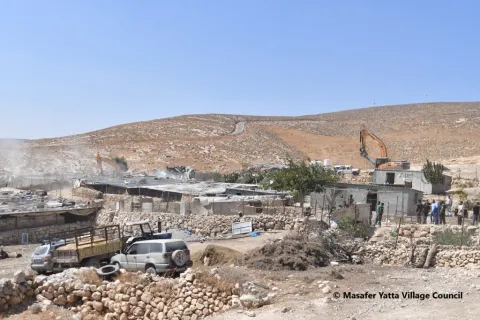
Destruction in Msafer Yatta

On 23 September, Israeli forces with Israeli Civil Administration bulldozers demolished dozens of Palestinian structures including homes, agricultural infrastructure as well as water tanks and solar panels in the village of Jinba. Three additional villages in Msafer Yatta have already been destroyed, almost entirely, in September 2026. Overall, there are 12 villages in Msafer Yatta housing over 1,100 Palestinians, most of whom have owned and lived on the land for generations.

“Our homes were torn down today, wiped from the face of the earth,” one resident of Jinba told UN Human Rights – OPT, “This isn’t the demolition of rocks, this is the destruction of years of hard work and memories.”

Israeli demolitions of Palestinian homes and infrastructure have so far displaced 1,500 people in the occupied West Bank in 2026 according to OCHA — over a third of all 4,300 forcibly displaced Palestinians this year.

“The forcible transfer of a civilian population from their land by an occupying power is a war crime. The case of Msafer Yatta also raises serious concerns of deepening Israel’s violation of international law’s prohibition of racial segregation and apartheid,” said Ajith Sunghay, the Head of UN Human Rights – OPT.

In the 1980s, Israel declared some 30,000 dunums of Msafer Yatta where Palestinians had lived long before 1967 as “Firing Zone 918”. Waves of Israeli eviction and demolition orders have continued in the area since then with Israeli authorities consistently citing the requirement of military training in the designated firing zone.

However, Israeli settlers live in at least 11 outposts within Firing Zone 918 without contestation, most of which were created after October 2023. All settlements are unlawful under international law, but outposts are illegal even under Israeli law. The Israeli Government has retroactively regularized at least one of the outposts partially located in Firing Zone 918 in February 2023.

“Israel’s toolbox for Palestinian erasure in the occupied West Bank is vast: demolitions, evictions, settlement expansion, settler violence, arbitrary zoning, land confiscations, appropriation of heritage sites, raids, devastating violence,” Sunghay said, “But it is all happening under the same banner — Israel consolidating its annexation of as much Palestinian territory as possible, with as few Palestinians as possible, as fast as possible.”

“Member States must act now while they still can, to halt this project and ensure Palestinians are able to exercise their right to self-determination,” he added.On 23 September, Israeli forces with Israeli Civil Administration bulldozers demolished dozens of Palestinian structures including homes, agricultural infrastructure as well as water tanks and solar panels in the village of Khirbet Jinba. Three additional villages in Msafer Yatta have already been destroyed, almost entirely, in September 2026. Overall, there are 12 villages in Msafer Yatta housing over 1,100 Palestinians, most of whom have owned and lived on the land for generations.

22 May, 2026

Israel must halt forcible displacement of Khan Al Ahmar and settlement expansion in E1

Israel must halt forcible displacement of Khan Al Ahmar and settlement expansion in E1The Israeli government must immediately cease its measures to forcibly displace the Khan Al Ahmar community in the...

Israel must halt forcible displacement of Khan Al Ahmar and settlement expansion in E1

The Israeli government must immediately cease its measures to forcibly displace the Khan Al Ahmar community in the area known as E1 in the occupied West Bank and stop its settlement expansion plans there.

Situated east of Jerusalem, Khan Al Ahmar is a Bedouin community and home to hundreds of Palestinians. On Tuesday, 19 May, the Israeli Minister of Finance and Additional Minister within the Ministry of Defence, Bezalel Smotrich, directed the Israeli Civil Administration to evict the Khan Al Ahmar community “as soon as possible”. This order puts the community at imminent risk of forcible transfer — a war crime.

Last year, Israeli authorities approved plans for 3,401 settlement units in the E1 area that would connect the Israeli settlement of Maaleh Adumim to occupied East Jerusalem. The planned construction would replace 18 Palestinian communities, including Khan Al Ahmar, with Israeli settlers. It would further disrupt the territorial continuity of the occupied West Bank, consolidate Israeli annexation, and severely impair a viable, contiguous Palestinian state.

Statements by Israeli officials link the settlement project in the E1 area to the thwarting of Palestinian statehood. This includes, in September 2025, the Israeli Prime Minister telling the press during a ceremony related to the E1 settlement project: “There will be no Palestinian state. This place is ours.”

The families of Khan Al Ahmar are mostly refugees, originally displaced from areas inside present-day Israel. For nearly two decades, Israeli authorities have consistently denied the community building permits and then issued orders to demolish their homes on the basis of the absence of such permits. Members of the community have spent years challenging the demolition orders in Israeli courts. Sustained international advocacy efforts have thus far prevented the community’s forcible transfer.

“There is no legal ambiguity about this: Israel’s forcible transfer of Palestinians is unlawful; settlements are unlawful; and Israel must cease all settlement activities, evacuate all settlements, and end its unlawful presence in the Palestinian territory in line with the conclusions of the International Court of Justice,” said Ajith Sunghay, Head of UN Human Rights in the Occupied Palestinian Territory.

“Instead, Israel is engaged in what appears to be relentless ethnic cleansing of Palestinians, and an unprecedented expansion of its settlement enterprise. If Israel continues to be allowed to alter facts on the ground with impunity, there will soon be nothing left to salvage.”

19 May, 2026

Occupied Palestinian territory: UN report on large-scale violations, including atrocity crimes

Occupied Palestinian territory: UN report on large-scale violations, including atrocity crimesRemarks by Ajith Sunghay, head of the UN Human Rights Office in the occupied Palestinian territoryGood aft...

Occupied Palestinian territory: UN report on large-scale violations, including atrocity crimes

Remarks by Ajith Sunghay, head of the UN Human Rights Office in the occupied Palestinian territory

Good afternoon and thank you for being here today.

Today I’m presenting this report which covers 19 months of large-scale violations of international law including atrocity crimes, from October 2023 to the end of May 2025.

One year later, despite the ceasefire concluded in October 2025, the lasting consequences of the patterns we documented are apparent.

The ceasefire diminished the immense scale of violence up to that point, and opened some modest humanitarian space. But killings and the destruction of infrastructure have continued on an almost daily basis, and the overall humanitarian situation remains dire. All while Hamas continues its own violations, including against the people of Gaza. 

In the West Bank, the rate of forcible displacement of Palestinians is unseen in decades and Israeli settlement expansion is unprecedented. Israeli military and police forces and settlers are killing more and more Palestinians with impunity, often together.

The chronicle of violence and injustice continues, and will impact Palestinians for generations to come.

The report points to war crimes and possible crimes against humanity by Israeli and Palestinian duty bearers.

On and after 7 October 2023, Palestinian armed groups committed war crimes and possible crimes against humanity when they horrifically attacked civilians in Israel, killed at least 1,124, took and kept hostages, and fired thousands of unguided missiles into Israel for over a year. Released hostages have provided credible accounts of torture and ill-treatment, including sexual violence. Thankfully, no more hostages remain in Gaza today.

On and after 7 October 2023, Israel unleashed devastating violence and dispossession in Gaza and the West Bank, committing war crimes and possible crimes against humanity. The report finds that the totality of Israeli conduct in Gaza raises serious concern about Israel’s compliance with its obligation to prevent acts within the scope of the Genocide Convention.

The fact remains that Palestinians have no means to ensure their survival or to protect their loved ones, with hundreds killed since the announcement of a ceasefire.

The Israeli military has killed 72,769 Palestinians since 7 October 2023 in Gaza: in their homes, in IDP shelters, in hospitals, in schools, in places of worship, on the streets, while queuing for aid, while trying to fish in the sea.

During the reporting period, the Israeli blockade on Gaza resulted in starvation and famine that was foretold and later confirmed. Hundreds starved to death, including children. Any use of starvation as a method of war against civilians is a war crime, and it may amount to a crime against humanity and even genocide in certain conditions.

Displaced Palestinians have scant prospects of return, raising concerns about ethnic cleansing and forcible transfer. In Gaza, the neighbourhoods they fled are gone as Israeli forces continue to unlawfully demolish buildings across Gaza— homes still laden with thousands of unretrieved Palestinian bodies.

In the West Bank, Israeli forces and settlers have killed 1,096 Palestinians since 7 October 2023, one in five of them children. Many incidents raise concerns about unlawful killings and extrajudicial executions.

Settler attacks are routinely carried out with the support, acquiescence, or participation of Israeli security forces. The Israeli government has intensified the militarisation of the settler movement, shielded them from accountability, and now actively benefits from settler violence as a catalyst for its stated annexation agenda.

The dispossession in the West Bank is also systematic and relentless, matched in intensity with the record rate of settlement expansion. Since this government took office, settlements increased by 80%, adding 102 settlements to the 127 that existed previously. 

The 33,000 Palestinians displaced from Jenin, Tulkarem, and Nur Shams refugee camps in 2025 remain unable to return to their homes.

Israeli authorities are forcing Palestinians out of their homes around the Old City in East Jerusalem at alarming levels, turning their properties over to settlers, or making room for settlement projects including a park and a cable car project.

Settler violence has become a key driver of displacement, so far displacing 45 entire Palestinian communities since October 2023.

The report documents more patterns that have alarmingly persisted.

Torture and ill-treatment of Palestinian detainees in Israeli custody is all too routine, including sexual violence, even cases of rape. as well as denial of sufficient sustenance and medical care.

And discriminatory practices have further reinforced Israel’s violation of the prohibition of apartheid and racial segregation.

And why does it all seem so endless?

Because not enough is being done to stop it. The ceasefire has not led to any forms of meaningful accountability for the violations committed in the preceding years. Nor has it led to any fundamental reckoning with the underlying driver – the protracted occupation.

Impunity only fuels recurrence. Most of the horrors documented here, and those documented for decades before, have gone unpunished, with no prospect of justice for the victims.

Beyond statements of condemnation, third States must urgently take every measure at their disposal and in conformity with international law to end the Israeli occupation, ensure the dismantlement of existing settlements, protect civilians, achieve accountability for serious violations by all parties, and ensure Palestinians are able to exercise their human rights.

In a context like this, lack of action is not passivity. It is a license.


30 March, 2026

International Women's Day - Remarks by Ajith Sunghay, Head of UN Human Rights - Palestine

Remarks by Ajith Sunghay, Head of UN Human Rights - PalestineInternational Women's Day- closing eventExcellency Minister Mona Al Khalili, Amb Tarja, RC Ramiz and my dear colleagues,Born into Israeli o...

Remarks by Ajith Sunghay, Head of UN Human Rights - Palestine

International Women's Day- closing event

Excellency Minister Mona Al Khalili, Amb Tarja, RC Ramiz and my dear colleagues,

Born into Israeli occupation, under Israeli blockade, and amidst devastating violence, Palestinian women are leading precarious lives, exceedingly vulnerable to forced displacement, dispossession, arbitrary detention, loss, and constant fear.

More than a century has passed since International Women’s Day was born out of what was, essentially, a human rights movement. Millions of women in different parts of the world marched and organized to demand labor and voting rights.

In 2026, it is a shame that Palestinian women are still systematically denied their basic rights. This includes their right to life, to safety and security, to education and healthcare, to dignified living, and to protection, not only from gender inequality, but from racial segregation and apartheid.

A Palestinian woman’s life cycle is shaped by structural violence from childhood to adolescence, adulthood, and into old age.

As a child, she is not safe. In Gaza, more than 20,000 girls and boys were killed due to Israeli attacks since 7 October 2023. In the same period in the West Bank, roughly 1 in 5 of the 1072 Palestinians killed by Israeli forces and settlers are children. The youngest victim there was Laila, a 2-month-old baby girl who was killed by Israeli gunfire in her bed in Jenin.

The right to education is violated at a devastating scale: Israeli bombardment in Gaza destroyed most schools and led to the killing of over 17,000 school children since October 2023.In the West Bank, over 100 Palestinian school children were killed in the same period. Settler violence, discriminatory and excessive movement restrictions, as well as raids, operations, and detentions by Israeli security forces have also greatly disrupted schooling for girls and boys.

Palestinian girls experience adolescence under extremely harsh conditions.

How many girls are coming of age in displacement? How many have gotten their first menstruation without access to clean water and basic hygiene products? How many are now falling victim to negative coping mechanisms such as child marriage and sexual exploitation?

Later in life, Palestinian women’s exercise of their right to start a family is also uniquely fraught.

Pregnant and breastfeeding women in Gaza are struggling to get enough nutrition. Some had to watch their newborns and children starve to death at the peak of the hunger crisis caused by the Israeli blockade and aid restrictions. At least165 children died of hunger in Gaza since October 2023 — a slow, painful, and completely preventable death.

Women in Gaza are also struggling to exercise their right to access adequate healthcare. Israeli bombardment largely destroyed the healthcare system in Gaza with 60% of health delivery points currently non-functional. Of those that remain partially operational, only 15% are capable of providing emergency obstetric care.

Women’s right to work is another frontier of struggle.

Palestinian women are among the most educated in the region. They are also among the least economically active women in the world. The distance between those two facts is occupation, incessant violence, and associated skyrocketing unemployment.

Against the odds of occupation, as well as discrimination and gender inequality and gender-based violence in their own communities, Palestinian women are carving spaces to advocate for change, to extend help, and to bear witness.

The price has been heavy.

As teachers, healthcare professionals, journalists, and aid workers, Palestinian women have been killed and injured in the thousands alongside men by Israeli fire in Gaza.

Women human rights defenders and anti-occupation activists are locked up alongside men in Israeli detention facilities, suffering inhumane conditions, torture, and ill-treatment.

Women like Mayson, the 37-year-old mother from Gaza whose story we told on International Women’s Day, are not giving up on their missing loved ones. Mayson knows where her late husband is, but she can’t reach the rubble that became his grave in the north.

Thousands like Mayson are pacing between hospitals, morgues, and displacement sites in search of information about their family members.

Women’s lives, women’s choices should not be this difficult in 2026.

A girl should never have to choose between school and humiliation and violence at an Israeli checkpoint. A mother should never have to choose between watching her children die of hunger or getting herself killed in an aid queue. A woman should never have to choose between her freedom and her peaceful activism.

Every Palestinian woman and girl is entitled not merely to survive, but to live in freedom, equality, dignity, and peace.

This is a human rights crisis. The solution starts with ending the root causes of occupation, discrimination, violence, and impunity.
 

17 March, 2026

Briefing on UN Human Rights High Commissioner's report on Israeli settlements Remarks by Ajith Sunghay, Head of UN Human Rights - Palestine

Briefing on UN Human Rights High Commissioner's report on Israeli settlements Remarks by Ajith Sunghay, Head of UN Human Rights - Palestine Since the end of the period covered by this report, the...

Briefing on UN Human Rights High Commissioner's report on Israeli settlements Remarks by Ajith Sunghay, Head of UN Human Rights - Palestine


Since the end of the period covered by this report, the pace of the concerted efforts by the Israeli government to seize as much Palestinian land as possible, with as few Palestinians in it as possible, is only becoming more relentless. To this end, Palestinians are pushed out of their homes and off their lands every day, to make room for more expansion of illegal settlements.

Israeli senior officials’ statements point to a policy to thwart Palestinian statehood and to do maximum, irreversible damage to Palestinians’ right to self-determination.

Today, I will brief you on just a few trends that continued to intensify after the period covered by the report.

First, an enabling policy and legislative environment continues to facilitate settlement expansion. In February 2026, the Israeli cabinet adopted decisions that will further extend Israeli sovereignty over the occupied West Bank, allow more Israeli land seizures, and allow settlers to purchase land from Palestinians in an environment where such transactions cannot be considered voluntary.

Second, Palestinians live with even more violence, restrictions and discrimination than they did just four months ago at the end of the reporting period.

Since the beginning of 2026, Israeli settlers have killed seven Palestinians across the West Bank — a significantly increased rate compared to the eight Palestinians killed by settlers in all of 2025.

Since the start of the conflict in the region on 28 February, the situation has become worse. Israeli security forces have continued to kill Palestinians with impunity, including a killing of a 17-year-old this morning, and an incident last Sunday when they opened fire on a car in Tubas and killed two parents with their two sons aged five and six.

In the same timeframe, Israeli security forces have also launched daily raids across the West Bank, seized dozens of Palestinian homes for several hours or several days to use as interrogation centres, and detained at least 200 Palestinians including for social media posts labelled as “incitement” or “glorification of the enemy”.

Israeli authorities have tightened the already heavy, discriminatory closures and movement restrictions across the West Bank, tearing communities apart and impeding Palestinians’ access to healthcare, livelihoods, education, and basic services.

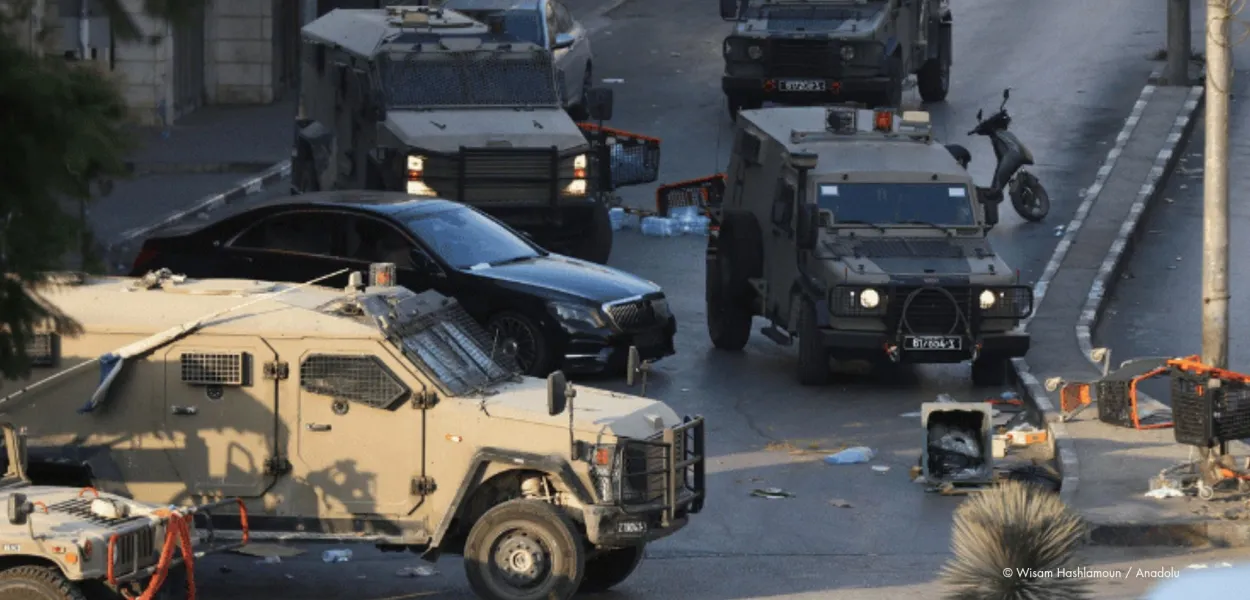
Yet, Israeli settlers are roaming free with complete impunity, often armed, forcing Palestinian family after Palestinian family off their lands. As a result, at least nine Palestinian communities have been fully or partially displaced since 28 February, mostly in the northern Jordan Valley.

Over the weekend, we received harrowing accounts from the residents of one of the last standing communities there, Khirbet Humsa. According to our monitoring, dozens of settlers attacked the community and assaulted Palestinian men and women in front of their children, stole livestock, and apparently sexually assaulted a young man in a horrifying way.

This violence is clearing Palestinians from the area while a new separation barrier is being constructed that will close this part of the northern Jordan Valley to Palestinians entirely.

Third, settlement expansion is also accelerating.

Last December, Israeli authorities approved 19 new settlements. This includes settlements in the northern West Bank where, last year, Israeli security forces had expelled at least 32,000 Palestinians who remain displaced to this day.

In January 2026, Israeli authorities issued tenders for the construction of thousands of settlement units in the so-called E1 area. This expansion will likely sever East Jerusalem from the rest of the West Bank and disrupt territorial continuity in the West Bank between north and south.

Before I close, I want to stress that Palestinians in Gaza are also still living under conditions of precarity and dehumanization, even five months after the ceasefire.

671 Palestinians were killed in Israeli military operations since this ceasefire, both in the vicinity of Israeli forces’ deployment lines, and far away in homes, tents, and on the streets. Thousands remain missing, buried under rubble or forcibly disappeared. The entry and flow of humanitarian aid is not reliable as quantities change, many essential goods are still blocked, and crossings are not dependably open.

The events of the past two and a half years in the Occupied Palestinian Territory have not only caused one of the worst humanitarian disasters of our lifetimes but also presented a severe human rights crisis, with the risk of further reverberations across the region and the world. This is a time to strengthen respect for human rights and humanitarian law. Ending the disturbing trends of violations, occupation and impunity in the Occupied Palestinian Territory is a good place to start.

24 February, 2026

Settler violence intensifies

Settlers’ rampages targeting Palestinians and their property are intensifying in the occupied West Bank unchecked, unabated, and with complete impunity. Settlers shot and killed 19-year-old-Nasra...

Settlers’ rampages targeting Palestinians and their property are intensifying in the occupied West Bank unchecked, unabated, and with complete impunity. 
Settlers shot and killed 19-year-old-Nasrallah Abu Siam on the outskirts of Mikhmas outside of Jerusalem on 18 February. No arrests were made despite widely circulating video evidence identifying perpetrators. 
Since 17 February, at least 39 Palestinian families were forced out of their homes by settlers including:

⭕️ The last 10 families in Al Burj area, northern Jordan Valley, thus completing the clearing of Al Burj community of all Palestinian residents.

⭕️ Four families from Ein Siniya village, continuing the alarming increase of settler activity and forced displacement in Area B.

⭕️ Thirteen families from Al Khalayil area in Al Mughayyir village, Ramallah, including from Area B.

⭕️ Twelve refugee families from Rammun village, Ramallah.

Occupation must end. Settlement expansion must stop. Settlers must be removed from the West Bank.