13 November, 2026

Israeli attacks on hospitals in Gaza must end

The airstrike on Nasser Hospital on Wednesday night continues a pattern of Israeli attacks on hospitals, killing patients and doctors, and destroying essential medical facilities. The airstrike killed...

The airstrike on Nasser Hospital on Wednesday night continues a pattern of Israeli attacks on hospitals, killing patients and doctors, and destroying essential medical facilities. The airstrike killed six, including a 13-year-old boy and a surgeon.  

Nasser Hospital is one of the few remaining in Gaza after years of relentless Israeli bombardment that left the healthcare system in tatters. According to initial reports, the strike used three missiles, only one of which exploded, leaving civilians, including patients and medical personnel, at risk of unexploded ordnance. Israeli forces last attacked Nasser Hospital in August 2025 when three airstrikes killed 22 Palestinians, including five journalists.  

A 2024 UN Human Rights report examined the pattern which had already destroyed most hospitals in Gaza by then and said the Israeli military “has not provided sufficient information to enable independent substantiation of its statements, when made, that the hospitals, ambulances, and personnel attacked had lost their special protection and constituted military objectives.”  

Direct attacks against hospitals, medical personnel and the sick and wounded amount to a war crime. 


For more information and media requests, please contact:

Mayy El Sheikh– mayy.elsheikh@un.org

30 October, 2026

Displacement deepens as Israeli forces push Palestinians into shrinking space

Displacement deepens as Israeli forces push Palestinians into shrinking spaceConcerns of ethnic cleansing in Gaza endure as Israeli forces continue to push Palestinians into an ever-smaller fraction o...

Displacement deepens as Israeli forces push Palestinians into shrinking space

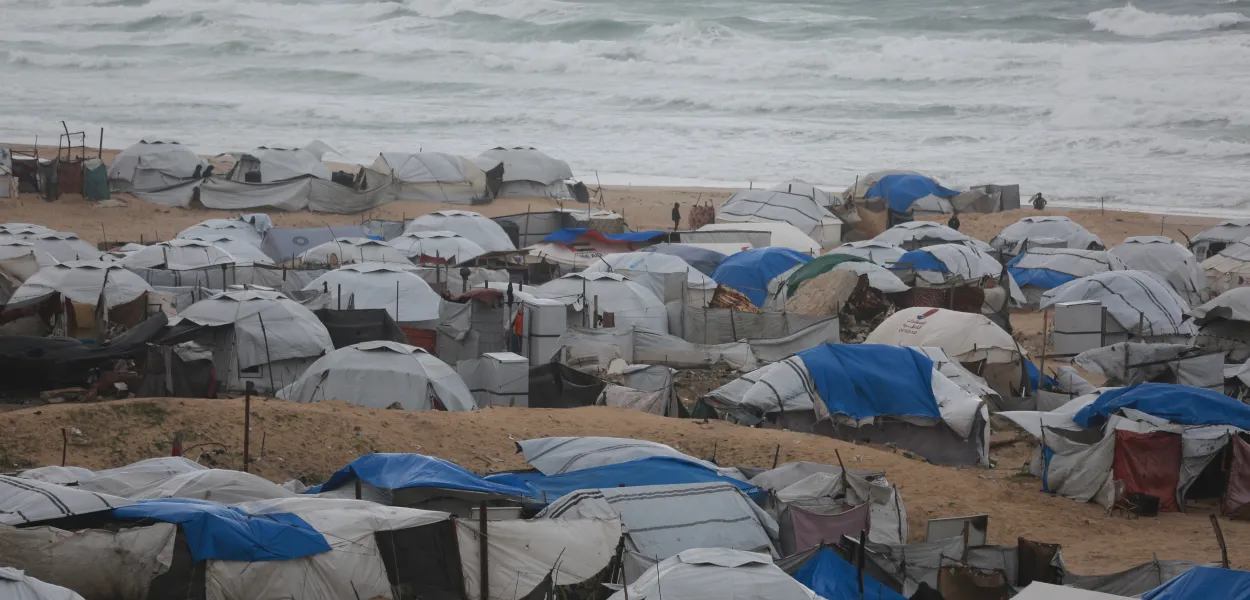
Concerns of ethnic cleansing in Gaza endure as Israeli forces continue to push Palestinians into an ever-smaller fraction of the territory, causing recurrent displacement while destroying the remaining civilian infrastructure and attacking displacement sites.

Palestinians in Gaza are surrounded by Israeli forces from all sides that continue to push them inwards with the stated aim of increasing the Israeli military deployment area to 70% of Gaza’s territory. The relentless contraction of space available to civilians comes with new displacement drivers in areas adjacent to Israeli forces’ deployment lines, commonly known as the “yellow line”.

Over the past two weeks, the UN Human Rights Office in the Occupied Palestinian Territory has documented the westward expansion of Israeli military deployment areas triggering new displacement of Palestinians in Al Shujaiyeh, Gaza City, and in eastern Al Bureij, eastern Deir al Balah and eastern Al Maghazi, Middle Gaza. In Al Shujaiyeh, Israeli forces’ westward push came with at least two Israeli attacks reported on displacement encampments, and detonations of the few buildings left standing in the area with the reported use of explosive robots.

According to reports received by UN Human Rights Office - OPT, an Israeli drone dropped munitions on tents sheltering displaced families at Al Shujaiyeh junction near the so-called yellow line on 25 October, setting tents on fire burnt for nearly five hours. The Palestinian Ministry of Public Works and Housing in Gaza said the fire displaced 200 families comprising 800 people, most of them women, children and elderly persons.

“The nightmare of displacement in Gaza is both acute and chronic,” said Ajith Sunghay, Head of UN Human Rights - OPT. “Those displaced before the announcement of a ceasefire have little to no prospect of return to the areas they fled, most of which are inaccessible because they fall beyond the so-called yellow line. And they continue to be displaced again and again.”

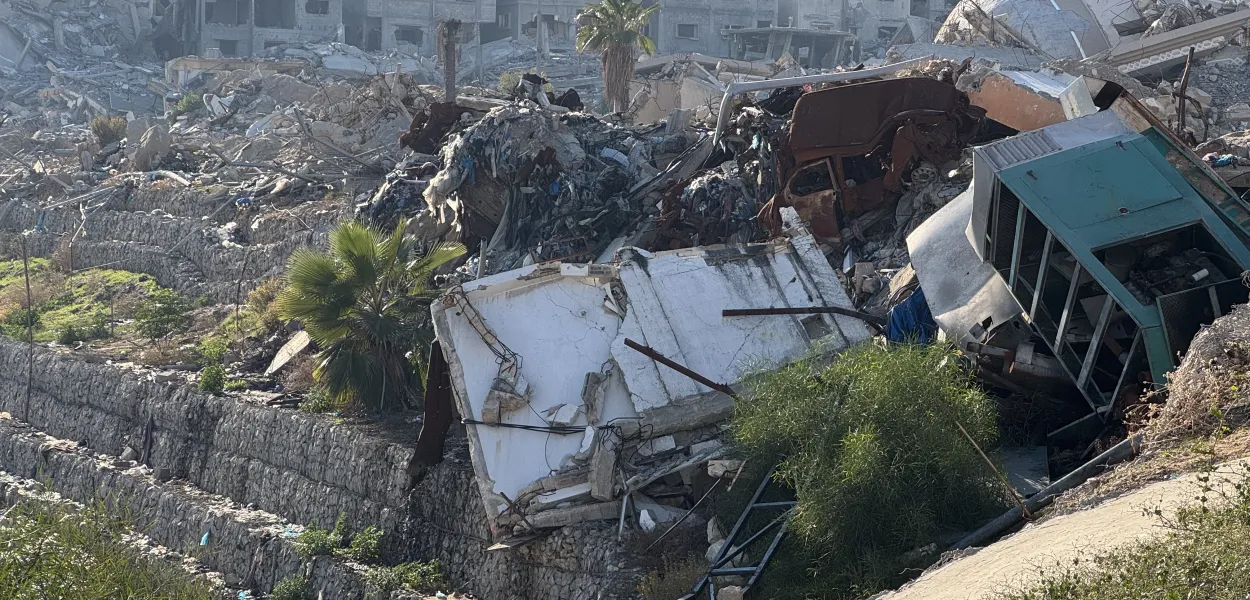
As an occupying power, Israel must cease the forcible transfer of Palestinians within the Gaza strip, a war crime that may also amount to a crime against humanity. Israel must facilitate the Palestinians’ safe and dignified return to their homes and the areas they fled. Instead, Israeli military operations have displaced nearly everyone in Gaza multiple times, laid to waste the infrastructure needed to support civilian life, and damaged or destroyed over 80% of all buildings and structures according to the United Nations Satellite Centre.

Today, Israeli forces appear to treat the yellow line as a kill zone, preventing Palestinians from returning to what is left of their homes on the other side. The displacement crisis is exacerbated by the restrictions imposed by Israeli authorities on the entry of shelter-related humanitarian assistance. And Israeli bombardment never ceased, even a year after the announcement of a ceasefire, while Palestinian families remained trapped in inadequate shelters, struggling to secure their most basic needs and deprived of their rights.

“There must be an end to this suffering. This is the fourth year of displacement for most Palestinians in Gaza, the fourth winter in tents too flimsy to withstand the rain, and they are still under fire through it all,” said Sunghay. “Let this be the last.”

10 October, 2026

One year after ceasefire announcement, killings continue across Gaza

A year after the announcement of a ceasefire in Gaza, Palestinians are still living under constant Israeli fire in attacks both near and far from the so-called “yellow line” that raise serious concern...

A year after the announcement of a ceasefire in Gaza, Palestinians are still living under constant Israeli fire in attacks both near and far from the so-called “yellow line” that raise serious concerns about continued crimes under international law, including war crimes.

“This is not life; this is endless torment with no end in sight. Human life has no value anymore,” said one father of three in Gaza. “There is not a single thing I can think of to ensure my children will survive from one minute to the next. We are constantly at the mercy of a random bullet, shelling, or an aerial attack. Sometimes it feels like they are playing games with our lives.”

Throughout the past year, Israeli attacks never ceased, killing and injuring Palestinians and causing recurrent displacement across Gaza. Over 1,400 Palestinians have been killed in Gaza according to the Palestinian Ministry of Health since the announcement of a ceasefire on 10 October 2025. UN Human Rights – OPT has so far verified1,076 conflict-related deaths between the ceasefire announcement and the end of July 2026, including 268 children, 126 women, and 682 men — women and children making up 37 per cent of all verified fatalities.

Since 7 October 2023, Israeli forces have killed over 20,000 children in Gaza, according to the Palestinian Ministry of Health. Since the announcement of a ceasefire in October 2025, UN Human Rights – OPT has verified the killing of 64 children in reported Israeli attacks that killed only children and no adults. This is in addition to 30 women and 10 more children killed in reported Israeli attacks in which all those killed were women or women and children with no men fatalities. The total proportion of civilian fatalities is likely much higher, as this number does not take into account all the civilian men killed in Gaza.
This pattern raises serious concerns that Israel is directing attacks against civilians not directly participating in hostilities — a war crime.

“Violence of this magnitude is outrageous at any time. To record it during a supposed ceasefire is simply unfathomable,” said Ajith Sunghay, Head of UN Human Rights – OPT. “Palestinians have endured these attacks while trapped within an ever-shrinking part of Gaza’s territory, surrounded from all sides by Israeli forces, and struggling to secure even the most basic necessities of life.”

The Israeli military has consistently expanded its deployment areas starting from nearly 53 per cent of Gaza’s territory at the time of the ceasefire announcement, with the objective of reaching 70 per cent of the territory as publicly stated by the Israeli Prime Minister. The boundary of these deployment areas has been commonly known as the “yellow line”, but monitoring over the past year demonstrates there is no single, identifiable line. Instead, Israeli forces continuously moved inwards, along ever-shifting lines not known to Palestinians, with frequent incursions into Palestinian communities.

While most verified fatalities have been recorded in reported Israeli attacks far away from Israeli military deployment areas, the conduct of Israeli forces around the so-called yellow lines raises serious concerns that it is being treated as a kill zone where lethal force is arbitrarily used.

A two-year-old boy was shot and killed in the early morning hours of 14 June 2026 in the arms of his father on their way to visit an aunt in Wadi Al Salqa, eastern Deir Al Balah. They were on a road approximately 150-200 meters west of the so-called “yellow line”, used routinely by Palestinians before the incident. On the way, the father saw a group of Israeli soldiers stationed at the entrance of an abandoned house in an apparent incursion west of the line. The soldiers were only 10 meters away, he told UN Human Rights – OPT, and they started shooting immediately.

“I saw my boy’s left eye come out of his face,” the father said. “As I realized a bullet penetrated his back and came out from his eye, another bullet struck me in the calf. I saw a bone fragment shoot out of my leg and land on the ground in front of me. I fell to the ground. My son was gasping for his last breath. I tightened my arms around him.”

The boy was taken away by soldiers, his father said, wrapped in a plastic sheet, “no longer moving or making any sounds”. The father was then stripped down, blindfolded, and dragged east, crossing the yellow line. Israeli soldiers moved him from vehicle to vehicle and from one site to another until he passed out from the bleeding around midnight.

“I woke up in Al Aqsa Martyrs Hospital in Deir Al Balah. I was informed that my son’s body was handed over as well. I do not know how and when we got there,” the father said.

Since the announcement of a ceasefire in October 2025, as of the end of July 2026, 331 Palestinians have been killed in the vicinity of the so-called yellow line as verified by UN Human Rights – OPT, including 66 children, 27 women, and 238 men. In many verified cases, there was no information to suggest the victims were posing any threat to Israeli forces. Many were carrying out ordinary civilian activities at the time of their killing, and some were killed while inside their tents. Targeting and killing civilians who are not directly participating in hostilities is a war crime regardless of their location or proximity to military deployment areas.


Sunghay reiterated UN Human Rights’ calls on third States to implement their duty to exercise influence over Israel to stop its violations of international law in Gaza, including by ceasing the supply of weapons and munitions facilitating serious violations of international law, and supporting the work of international accountability mechanisms.

“Accountability is not an afterthought or part of a distant future of recovery. It is a cornerstone of deterrence and non-recurrence. And it is already overdue,” he said.
15 September, 2026

Remarks to the press on missing persons in Gaza

Remarks to the press on missing persons in GazaAjith Sunghay – Head of the UN Human Rights Office in the Occupied Palestinian TerritoryHuman remains believed to belong to 96 people from three Palestin...

Remarks to the press on missing persons in Gaza

Ajith Sunghay – Head of the UN Human Rights Office in the Occupied Palestinian Territory

Human remains believed to belong to 96 people from three Palestinian families have been recovered from under the rubble in Gaza City this month, around half were women and children.

One family, the Malakas, had lost 72 members in Israeli airstrikes on the family homes in November 2023. Only three bodies were recovered at the time. Remains believed to belong to 55 more members of the family were among those recovered this month. The remaining 14 family members are still missing beneath the rubble. Like many in Gaza, they may never be recovered. The sheer explosive power of heavy munitions sometimes left no recoverable remains. And it is increasingly difficult to distinguish rubble from remains as the years pass.

A survivor of the attack on the Malaka family homes told us that, for nearly three years, he felt “buried” beneath layers of grief and pain: “The pain of knowing they still lie in ruins, the pain of being unable to recover and bury them, and the ultimate pain of losing them.”

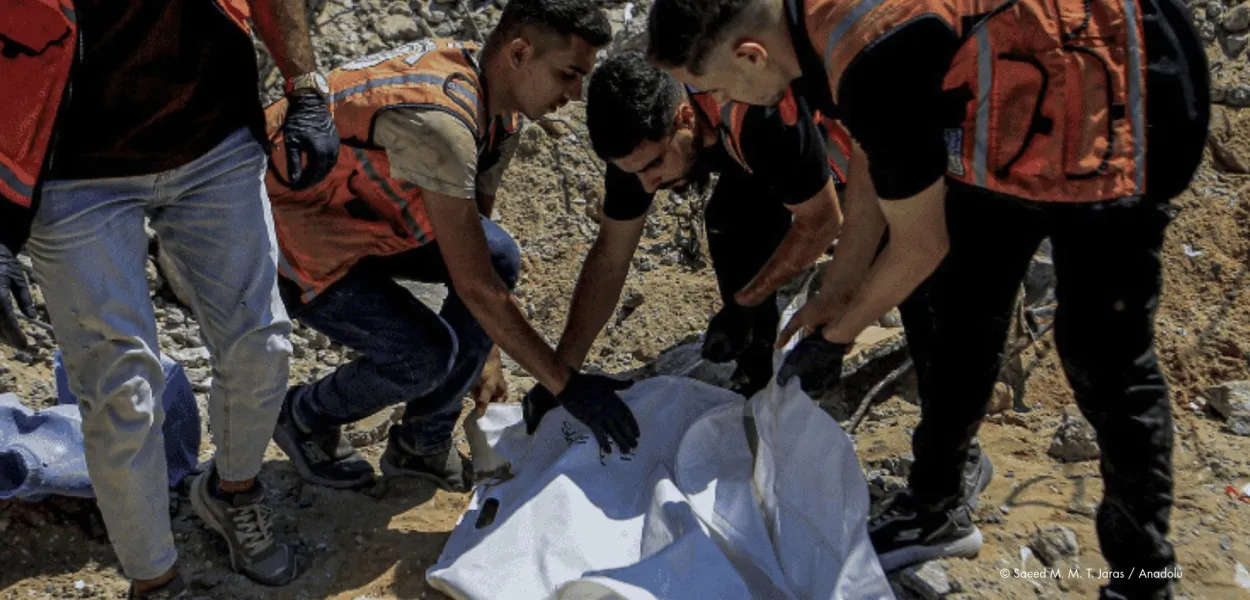
It is estimated that at least 8,000 bodies remain buried under the rubble across the strip. Palestinian Civil Defence teams have recovered over 800 bodies since the announcement of a ceasefire in October 2025 despite severe shortages of equipment, fuel, and personnel. At this pace, completing the recovery of the remaining bodies will take at least 10 more years. Even longer when accounting for the time needed to identify bodies, if it is ever possible.

It’s Israel’s obligation under international law to do everything possible to ensure these remains are found, identified, and buried with dignity in accordance with the families’ religious and cultural beliefs. Instead, the collective impact of Israel’s conduct is making any systematic, large-scale search, recovery, and identification effort nearly impossible.

Some families, like the Malakas, have been unable to recover the remains of their loved ones due to the lack of resources. Israeli authorities have been blocking the entry of the heavy machinery and trained personnel needed for large-scale recovery. At present, Palestinian Civil Defence teams report having only one excavator left and, at times, being forced to dig through rubble with their bare hands.

Some families in Gaza cannot reach the areas where their missing family members were killed to search for their remains. Israeli forces surround the Palestinian population in Gaza from all sides along the constantly shifting, so-called “yellow line”. Most of the territory of Gaza is now beyond the yellow line — inaccessible to Palestinians, including Civil Defence teams and families of missing persons. Reports are also mounting about Israeli soldiers removing and crushing rubble there — rubble laden with people’s remains.

Even when bodies are recovered, families are often unable to identify them. Israel has been blocking the entry of forensic and identification tools such as DNA and fingerprint kits, leaving families to identify remains by physical characteristics, or by guessing based on the location of the recovery.

If a natural disaster caused this scale of crisis, international mechanisms, deployment of specialized search and forensic teams, and massive resources to support large-scale operations of search, recovery, and identification would all be triggered. Yet the needs here, despite the human causes this time, are just as great, and I would urge similar kind of joined-up response here.
This predictably risks the loss of evidence needed to ensure every individual responsible for atrocity crimes is held to account. It also prolongs the anguish of thousands of families already living in perpetual fear, insecurity, and want. They have a right to know the fates of their children, parents, siblings, and cousins. They have a right to mourn them with dignity. And they have a right to justice.


Also read the statement by Volker Türk: "Türk says recovery of remains in Gaza three years later adds to Palestinian trauma", on missing persons in Gaza: https://www.ohchr.org/en/press-releases/2026/09/turk-says-recovery-remains-gaza-three-years-later-adds-palestinian-trauma
 

3 September, 2026

Bloodshed in Gaza must come to an end

Almost a year since a ceasefire was announced and nowhere and nobody in Gaza is safe. Twenty-four Palestinians have been killed in Israeli attacks in the five days between 28 August and 1 September, i...

Almost a year since a ceasefire was announced and nowhere and nobody in Gaza is safe. Twenty-four Palestinians have been killed in Israeli attacks in the five days between 28 August and 1 September, including four children and a woman. Twenty-one were killed in airstrikes.

Palestinian armed elements’ operations with the reported support of Israeli forces are causing civilian harm. On 1 September, according to initial information, the Israeli military conducted a raid into Al-Katiba area in West Gaza city accompanied by Palestinian armed elements under the cover of multiple airstrikes, killing a 3-year-old girl and a 13-year-old boy, and a 31-year-old man.
The fourth victim was a 49-year-old woman, the wife of 51-year-old Moein Al Arbeed, a colonel with the de-facto Internal Security Agency who has been detained by Israeli forces during the raid.

Israel’s stated pursuit of individuals that it alleges to be lawful targets does not suspend its international humanitarian law or international human rights law obligations, including in relation to Palestinians’ right to life. Nor does it justify the daily terror Palestinians are subjected to in Gaza. This bloodshed must finally come to an end. There must be justice and accountability for all the unlawful killings and other violations in Gaza.

26 August, 2026

Statement by Israeli military official raises concerns

The IDF Chief of the General Staff in the Gaza Strip has stated that: “The pursuit of the terrorists from October 7th continues – everyone who took part in the massacre will live on the run until they...

The IDF Chief of the General Staff in the Gaza Strip has stated that: “The pursuit of the terrorists from October 7th continues – everyone who took part in the massacre will live on the run until they are eliminated”. Allegations of criminal conduct must be addressed in accordance with international human rights standards, through independent, impartial, and lawful processes that fully respect due process guarantees and the presumption of innocence.

The targeted killing of persons on the basis of allegations of criminal conduct amounts to extrajudicial executions and a war crime. Anyone ordering, soliciting or encouraging such acts is criminally liable under international law.

21 August, 2026

Gaza: Civilians Continue to Pay the Price as Deadly Attacks Persist

Gaza: Civilians Continue to Pay the Price as Deadly Attacks PersistOn 18 and 19 August alone, at least 17 Palestinians, including children and women, were reportedly killed in Israeli attacks across G...

Gaza: Civilians Continue to Pay the Price as Deadly Attacks Persist

On 18 and 19 August alone, at least 17 Palestinians, including children and women, were reportedly killed in Israeli attacks across Gaza. Among the dead was a 13-year-old boy and his father killed in a strike on a seaside café, in addition to a 13-year-old girl killed in an attack on a police facility in Gaza City.

These incidents are a stark reminder that, despite occasional drops in the number of reported attacks, civilians throughout Gaza remain exposed to persistent, unpredictable, lethal harm.

Between 13 and 19 August, at least 22 Palestinians were reportedly killed in Israeli military attacks across Gaza. Under international humanitarian law, attacks directed at civilians, as well as indiscriminate and disproportionate attacks, are prohibited. Such attacks may amount to war crimes and other atrocity crimes.

The continuing pattern of attacks against police personnel and facilities in Gaza is alarming. UN Human Rights recorded an attack on 19 August on the Municipal Police headquarters in Gaza City, killing at least nine Palestinians, including a 13-year-old girl and eight police officers. Among the officers killed was the Director of the Women's Police in Gaza Governorate, Fatena Al-Sahar. The strike occurred in a densely populated area hosting large numbers of internally displaced people, injuring other civilians, including women and children.

Between January and August 2026, UN Human Rights has recorded at least 18 Israeli attacks against police personnel in Gaza, resulting in the killing of at least 77 Palestinians, including 57 police personnel, six children and four women. Six of these attacks were carried out since June.

Under international humanitarian law, police personnel are civilians protected against attacks. Targeting them is a war crime. They may lose this protection only if and for such time as they directly participate in hostilities. As the occupying Power, Israel has the obligation to ensure public order and safety. Such attacks further dismantle civilian law enforcement structures in Gaza and undermine protection to communities already subjected to wide-ranging human rights violations.

The concentration of casualties in these attacks, in densely populated civilian areas, including a café, a tent sheltering internally displaced people, a civilian vehicle, and police headquarters surrounded by displaced families, is part of a wider pattern of indiscriminate and disproportionate Israeli attacks against Palestinians documented by UN Human Rights since October 2023.

"It is hard to see any ‘military necessity’ of Israel’s ongoing attacks across a decimated landscape, which continue to kill and maim civilians, including children and police personnel,” said Ajith Sunghay, head of UN Human Rights’ office in Palestine. “The right to life is the foundational right for all. But it seems in Gaza, there is no respect left for human rights as death, injury and destruction continue day after day.”

19 August, 2026

Latest comment from Israel Government Minister beyond the bounds of humanity

Latest comment from Israel Government Minister beyond the bounds of humanity The latest comments by Israel’s Minister of National Security, Itamar Ben-Gvir, advocating and inciting violence amoun...

Latest comment from Israel Government Minister beyond the bounds of humanity 

The latest comments by Israel’s Minister of National Security, Itamar Ben-Gvir, advocating and inciting violence amounting to atrocity crimes, are yet another example of the utter contempt for international humanitarian law, international human rights law and the basic tenets of humanity displayed by senior Israeli Government officials.  

These dehumanising remarks follow the devastating human toll of 73,400 Palestinians killed and 174,312 injured in Gaza since 7 October 2023, according to the Palestinian Health Ministry, alongside 1,123 Palestinians killed in the occupied West Bank.

In January 2024, the International Court of Justice handed down binding provisional measures requiring Israel to “take all measures within its power to prevent and punish the direct and public incitement to commit genocide in relation to members of the Palestinian group in the Gaza Strip”.

Today, in the wake of the utter destruction of Gaza and unrelenting Israeli settler attacks and forced displacement of Palestinians in the West Bank, statements from senior Israeli officials to justify and encourage further unlawful mass killings of Palestinians continue unabated. It is beyond the bounds of humanity.

The Israeli Government must promptly and unequivocally condemn such incitement to violence, investigate instances of incitement, particularly from senior government officials, and hold those responsible to account. Third States must also take steps to fulfil their obligations to prevent and punish atrocity crimes.  

12 August, 2026

UN Human Rights Office in the Occupied Palestinian Territory (OPT) concerned over Israel’s ill-treatment, violence and confiscation of belongings from Gaza returnees

UN Human Rights - Palestine concerned over Israel’s ill-treatment, violence and confiscation of belongings from Gaza returnees UN Human Rights - Palestine is concerned about the increasing number...

UN Human Rights - Palestine concerned over Israel’s ill-treatment, violence and confiscation of belongings from Gaza returnees 

UN Human Rights - Palestine is concerned about the increasing number of reports by Palestinians returning to Gaza that they have been subjected to physical violence, threats, degrading treatment, and intrusive searches by Israeli soldiers, as well as other armed individuals acting under the authority of Israel, at Kerem Abu Salem crossing point, and previously at Rafah crossing point. There are also widespread reports of the confiscation of medicines, medical supplies, identity documents, educational certificates, money, and other personal belongings, with no process for their recovery.  

Between 7 July and 4 August 2026, hundreds of returnees described prolonged and exhausting journeys. In just one day, in July, 54 of 92 returnees reported that some or all of their personal belongings had been confiscated, including medicines and assistive devices.

In early August, an older man reported that, after objecting to money being missing from his belongings, Israel soldiers beat and handcuffed him, dragged him along the ground, detained him in a small room, and then transferred him to a bus.  

In another instance, there were reports of unnecessary intrusive searches and degrading treatment. Two women returning together reported that they were taken separately into closed areas and subjected to an intrusive body search by a female Israeli soldier, being required to remove their clothes while being filmed by a surveillance camera, after a metal necklace worn by one of them had triggered a security alarm.  

These reports are consistent with concerns documented during earlier crossings, where returnees described verbal abuse, intimidation, interrogations, violent handling and theft from their luggage.

Children face additional vulnerabilities. A four-year-old girl arrived in Gaza alone after her father was prevented from returning to Gaza. Upon her arrival, humanitarian partners had to initiate family tracing to help reunite her with her mother and uncle.  

“These violations we are seeing against Palestinians returning to Gaza are part of a broader pattern of violations and dehumanization, and are discouraging people from returning,” said Ajith Sunghay, Head of UN Human Rights in the Occupied Palestinian Territory. “These are vulnerable people returning to their occupied land that has been devastated by years of Israeli bombardment and starved of life’s basic essentials. And now they are having to endure this on their return? It is simply abhorrent.”