21 October, 2026

Urgent action needed to protect Palestinian olive harvest

Urgent action needed to protect Palestinian olive harvestUN Human Rights - Palestine calls on all States and donors to take urgent action, beyond condemnations and statements, to press for the protect...

Urgent action needed to protect Palestinian olive harvest

UN Human Rights - Palestine calls on all States and donors to take urgent action, beyond condemnations and statements, to press for the protection of Palestinian communities as the olive harvest season gets off to an ominous start.

At least 160 Israeli settler attacks related to the olive harvest have been recorded in the occupied West Bank in the first two weeks of October, according to the UN Office for the Coordination of Humanitarian Affairs (OCHA), often under the protection or with the participation of Israeli forces. Settlers continued the attacks over the past few days, including assaulting an international journalist while covering the harvest, and attacking European diplomatic representatives on a visit to a Palestinian community shortly after the start of the harvest season. Settlers attacking the olive harvest have used live ammunition and arson, destroyed olive trees and groves including ancient trees, damaged Palestinian property, and stolen harvested olives and agricultural equipment.

In addition to the attacks by Israeli forces and settlers, thousands of Palestinian farmers are unable to access their olive trees for the harvest due to severe Israeli movement restrictions that dramatically worsened over the past three years. In the meantime, illegally present settlers are allowed to access Palestinians’ lands and harvest their crops.

“Palestinians often say that olive trees are symbolic of their existence as a group and their connection to the land. Attacks on the olive harvest can’t be separated from the pervasive Israeli assault on Palestinians’ existence as a group connected to this land,” said Ajith Sunghay, Head of UN Human Rights – OPT. “This is yet another tool of displacement and dispossession, adding to the suffering of communities whose rights are under attack on a daily basis.”

The Palestinian Ministry of Agriculture estimates the losses of the Palestinian olive sector at USD 157 million since October 2023 in the West Bank in Gaza. The Ministry said 90% of Gaza’s two million olive trees have been destroyed since October 2023. In the West Bank, 286,000 olive trees have been damaged through the end of September 2026 including 25,000 trees in 2023, 70,000 trees in 2024, 91,000 trees in 2025, and 100,000 trees in 2026 even before the start of this year’s olive harvest season.

Sunghay reiterated the call to action issued ahead of the season by the Protection Cluster led by UN Human Rights – Palestine — a network of over 100 international and national organizations that focuses on assessing and responding to the protection risks and needs of the most vulnerable Palestinians. The Protection Cluster urged member states to increase international and diplomatic field presence and engagement in high-risk communities, particularly during critical harvesting periods, complementing existing protective presence arrangements and focusing attention on locations facing recurrent violence and access restrictions.
Member states must exercise pressure on Israel to:

  • Ensure Palestinians’ safe, timely, and meaningful access to their agricultural land.
  • Protect Palestinian farmers from violence, intimidation, and expulsion.
  • Protect agricultural land, crops, and productive assets.
  • Ensure access for humanitarian and emergency responders.
  • Strengthen accountability and provide legal remedies.
  • End settlement expansion and related measures that contribute to violence, dispossession, and displacement.

The Protection Cluster also called upon donors to provide timely, adequate, and flexible funding for protective presence, community-based protection, emergency preparedness, legal assistance and food security and livelihoods interventions, enabling partners to respond rapidly as access conditions and needs change.

Read the joint Protection Cluster and Food Security Sector snapshot report to learn more about the protection risks facing olive harvest farmers, the hotspots of prioritized, at-risk areas related to the harvest season, and the recommendations of Palestinian communities towards more safety: Protection And Food Security and Livelihoods | West Bank Olive Harvest 2026 | Preparatory Workshop Outcomes - occupied Palestinian territory | ReliefWeb

14 October, 2026

Israeli raids in Ramallah raise concerns about shrinking civic space

Israeli forces raided premises in Al Bira, Ramallah, claiming they were offices of the Addameer Prisoner Support and Human Rights Association (Addameer) and the Union of Palestinian Women’s Committee ...

Israeli forces raided premises in Al Bira, Ramallah, claiming they were offices of the Addameer Prisoner Support and Human Rights Association (Addameer) and the Union of Palestinian Women’s Committee (UPWC), on 13 October 2026. This continues an alarming Israeli crackdown on Palestinian civic space marked by violent raids, arbitrary detentions, and undue restrictions on Palestinians’ freedoms of expression, association, and assembly.

During the raid, Israeli soldiers confiscated files and equipment and detained a journalist and a former prisoner. They left a written notice on the alleged premises of Addameer, a prominent human rights organization, claiming it is an “illegal entity”. Israeli forces also raided the courtyard of the Palestine Medical Complex, the largest public medical facility in the occupied West Bank.

Addameer and UPWC are two of six leading Palestinian civil society organizations designated as “terrorist” by Israeli authorities in 2021 based on vague definitions which led to unlawful restrictions on their human rights work. To date, no evidence was presented to substantiate the accusations.

Israeli authorities must immediately stop the crackdown on Palestinian civic space. Such raids and the detention of human rights defenders and protection workers have had a chilling effect on human rights work in the Occupied Palestinian Territory at a time when working towards protection of civilians, accountability, and justice is most desperately needed.

24 September, 2026

Israel must immediately halt demolitions in Msafer Yatta

Israel must immediately halt demolitions in Msafer YattaIsrael must immediately halt the mass destruction of Palestinian villages in Msafer Yatta, South Hebron Hills, and the forcible transfer of the ...

Israel must immediately halt demolitions in Msafer Yatta

Israel must immediately halt the mass destruction of Palestinian villages in Msafer Yatta, South Hebron Hills, and the forcible transfer of the residents, compounding fears of ethnic cleansing in the occupied West Bank.

Image
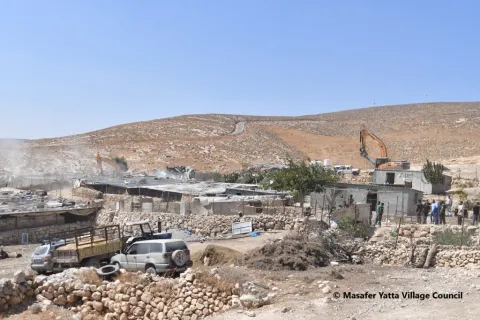
Destruction in Msafer Yatta

On 23 September, Israeli forces with Israeli Civil Administration bulldozers demolished dozens of Palestinian structures including homes, agricultural infrastructure as well as water tanks and solar panels in the village of Jinba. Three additional villages in Msafer Yatta have already been destroyed, almost entirely, in September 2026. Overall, there are 12 villages in Msafer Yatta housing over 1,100 Palestinians, most of whom have owned and lived on the land for generations.
“Our homes were torn down today, wiped from the face of the earth,” one resident of Jinba told UN Human Rights – OPT, “This isn’t the demolition of rocks, this is the destruction of years of hard work and memories.”

Israeli demolitions of Palestinian homes and infrastructure have so far displaced 1,500 people in the occupied West Bank in 2026 according to OCHA — over a third of all 4,300 forcibly displaced Palestinians this year.

“The forcible transfer of a civilian population from their land by an occupying power is a war crime. The case of Msafer Yatta also raises serious concerns of deepening Israel’s violation of international law’s prohibition of racial segregation and apartheid,” said Ajith Sunghay, the Head of UN Human Rights – OPT.

In the 1980s, Israel declared some 30,000 dunums of Msafer Yatta where Palestinians had lived long before 1967 as “Firing Zone 918”. Waves of Israeli eviction and demolition orders have continued in the area since then with Israeli authorities consistently citing the requirement of military training in the designated firing zone.

However, Israeli settlers live in at least 11 outposts within Firing Zone 918 without contestation, most of which were created after October 2023. All settlements are unlawful under international law, but outposts are illegal even under Israeli law. The Israeli Government has retroactively regularized at least one of the outposts partially located in Firing Zone 918 in February 2023.

“Israel’s toolbox for Palestinian erasure in the occupied West Bank is vast: demolitions, evictions, settlement expansion, settler violence, arbitrary zoning, land confiscations, appropriation of heritage sites, raids, devastating violence,” Sunghay said, “But it is all happening under the same banner — Israel consolidating its annexation of as much Palestinian territory as possible, with as few Palestinians as possible, as fast as possible.”

“Member States must act now while they still can, to halt this project and ensure Palestinians are able to exercise their right to self-determination,” he added.On 23 September, Israeli forces with Israeli Civil Administration bulldozers demolished dozens of Palestinian structures including homes, agricultural infrastructure as well as water tanks and solar panels in the village of Khirbet Jinba. Three additional villages in Msafer Yatta have already been destroyed, almost entirely, in September 2026. Overall, there are 12 villages in Msafer Yatta housing over 1,100 Palestinians, most of whom have owned and lived on the land for generations.
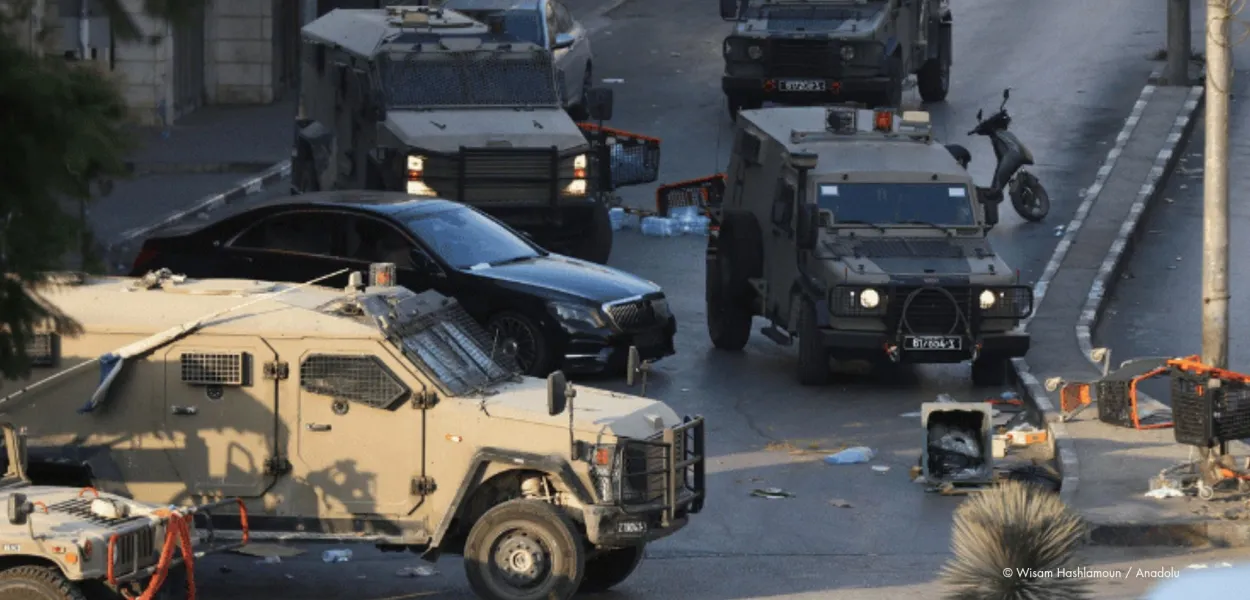
3 September, 2026

Israeli forces killed two boys in Al Mughayyir

Israeli forces shot and killed two Palestinian boys,16-year-old Khalil Shihadeh and 17-year-old Omar Al Nassaan, in Al Mughayyir during a reported settler attack. Israeli forces and settlers have now ...

Israeli forces shot and killed two Palestinian boys,16-year-old Khalil Shihadeh and 17-year-old Omar Al Nassaan, in Al Mughayyir during a reported settler attack. Israeli forces and settlers have now killed 9 Palestinians in the town since December 2024, including 5 boys.  

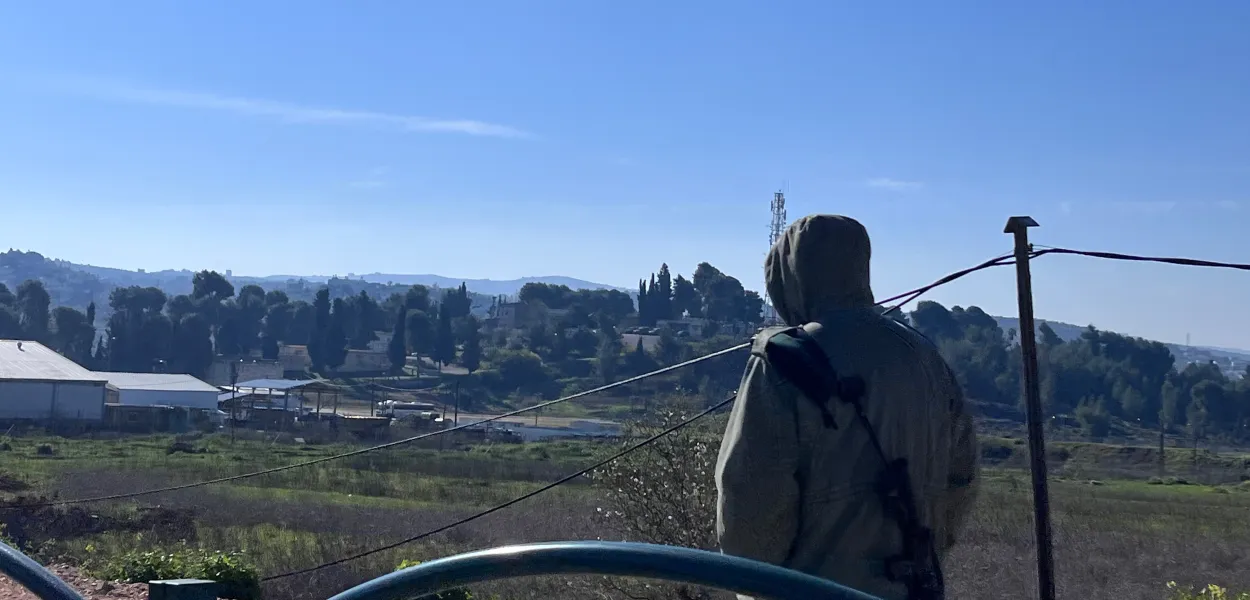
Surrounded by 8 settler outposts, Al Mughayyir has been a target for incessant settler and state violence to force Palestinian residents to leave. This included more than 50 settler attacks in 2026 alone, according to OCHA, with an average of 7 attacks per month, with the acquiescence, support, and participation of Israeli forces. 

While outposts expand around Al Mughayyir, settler and state violence has already purged entire surrounding communities of Palestinians, including the villages of Ein ar Rashash, Ras al Tin, and Ein Samya. 

Israel must meet its international law obligation to end its unlawful presence and evacuate all settlers from the occupied West Bank.

13 August, 2026

Settler encroachments and attacks on Palestinian homes are beyond a boiling point

Settler encroachments and attacks on Palestinian homes are beyond a boiling pointIsraeli authorities must immediately remove settlers who are violently displacing thousands of Palestinians, unlawfully...

Settler encroachments and attacks on Palestinian homes are beyond a boiling point

Israeli authorities must immediately remove settlers who are violently displacing thousands of Palestinians, unlawfully grabbing Palestinian land and expanding settlements.

Since the establishment of an Israeli settler outpost near Qusra, a Palestinian town located in Nablus Governorate in Area B of the occupied West Bank in November 2025, Israeli settlers have reportedly taken control of the area west of the town, located in Area B. During this time, Palestinians living in Qusra have endured increasingly frequent attacks by settlers, including home invasions, physical assaults, acts of vandalism, theft and arson, including against a local mosque.

In an emblematic case of settler violence, in July, Israeli settlers from an outpost located in the Ras al Ein area of Qusra cut the water and electricity supply to three Palestinian homes located nearby. Then, on 9 August, the settlers closed all the gates and entrances leading to these Palestinian homes and set up a tent between the houses, refusing to allow anyone to enter or leave the area. This has resulted in three Palestinian households, comprising some 15 people including at least two children, being trapped inside their homes in a state of terror, unable to attend to their basic needs and without access to water or electricity.

The families reported that they requested Israeli security forces present at the site to intervene, but to no avail. Instead, Israeli security forces seem to have blocked medics, solidarity activists and journalists from reaching the families. In a sign that could indicate collusion between the ISF and settlers, video footage shows soldiers praying together with settlers at the location. On 12 August, soldiers eventually dismantled the settlers’ tent without removing the settlers who, as of 13 August, are still surrounding the homes.

These criminal actions by the settlers, supported or acquiesced to by Israel, the Occupying Power, are making life unbearable for these Palestinian families, and are clearly aimed at forcing them to leave their homes and land. Time is running out for these three families before they are forcibly displaced.

The International Court of Justice is clear that all Israeli settlements are illegal and that Israel is obligated to cease all settlement activities, evacuate all settlers, including those terrorizing Qusra and Jalud, and bring to an end its unlawful presence in the West Bank. In the meantime, Israel must comply with its obligations under the laws of occupation to ensure the security of the local Palestinian population, which includes preventing attacks by Israeli settlers unlawfully present in the occupied West Bank, investigating such attacks and ensuring accountability of those found responsible for conducting, supporting or tolerating these attacks, including through the imposition of sentences commensurate to the abuses and violations.

22 July, 2026

Palestinian authorities must stop practices of arbitrary detention, torture, and ill-treatment

Palestinian authorities must stop practices of arbitrary detention, torture, and ill-treatmentThe UN Human Rights Office in the Occupied Palestinian Territory condemns the Palestinian authorities’ con...

Palestinian authorities must stop practices of arbitrary detention, torture, and ill-treatment

The UN Human Rights Office in the Occupied Palestinian Territory condemns the Palestinian authorities’ continued use of arbitrary detention, torture and other forms of ill-treatment against Palestinians detained in the West Bank for “security reasons”, including journalists, dissidents, and political activists.

Palestinian authorities continue to arbitrarily or unlawfully deprive dozens of Palestinians of liberty — many are reportedly detained under a law that was declared unconstitutional by the Palestinian Supreme Constitutional Court. UN Human Rights – OPT has also gathered information on several male prisoners, including children, who continued to be detained by Palestinian security forces despite courts having ordered their release.

Some detainees in Palestinian detention facilities have reported torture and other forms of ill-treatment, including painful stress positions, severe beatings and whippings, and prolonged solitary confinement. Detainees who reported torture and ill-treatment frequently referred to experiencing suspension in a position known in Arabic as “shabeh”, where their hands are shackled behind their backs, and they are suspended from the ceiling by their wrists for days at a time.

Over the years, the Palestinian authorities have worked closely with our Office and made some advancements, including legal reforms and increased engagement with the UN Committee Against Torture. However, much more needs to be done to guarantee the rights and dignity of Palestinian detainees.

The Palestinian authorities must immediately stop all forms of torture and other ill-treatment of detainees and all arbitrary or unlawful detention. Those deprived of liberty must be treated with humanity and respect for their dignity. Among others, they must be provided with regular outdoor access, sufficient living space to prevent overcrowding, and adequate food, medical care, clothing, and sanitation facilities and hygiene conditions. They must also be entitled to challenge the lawfulness of their detention before a court.

Palestinian authorities must also conduct prompt, thorough, independent, impartial and effective investigations into all reports of torture and ill-treatment of detainees and hold perpetrators to account.

To prevent recurrence, we call upon the Government of the State of Palestine to operationalize commitments taken within the National Commission against Torture, and under the UN Convention against Torture and Other Cruel, Inhuman or Degrading Treatment or Punishment and establish a National Preventive Mechanism with a mandate to regularly inspect places of detention.