Briefing to the press on the winter crisis in Gaza
Ajith Sunghay, Head of UN Human Rights — Palestine
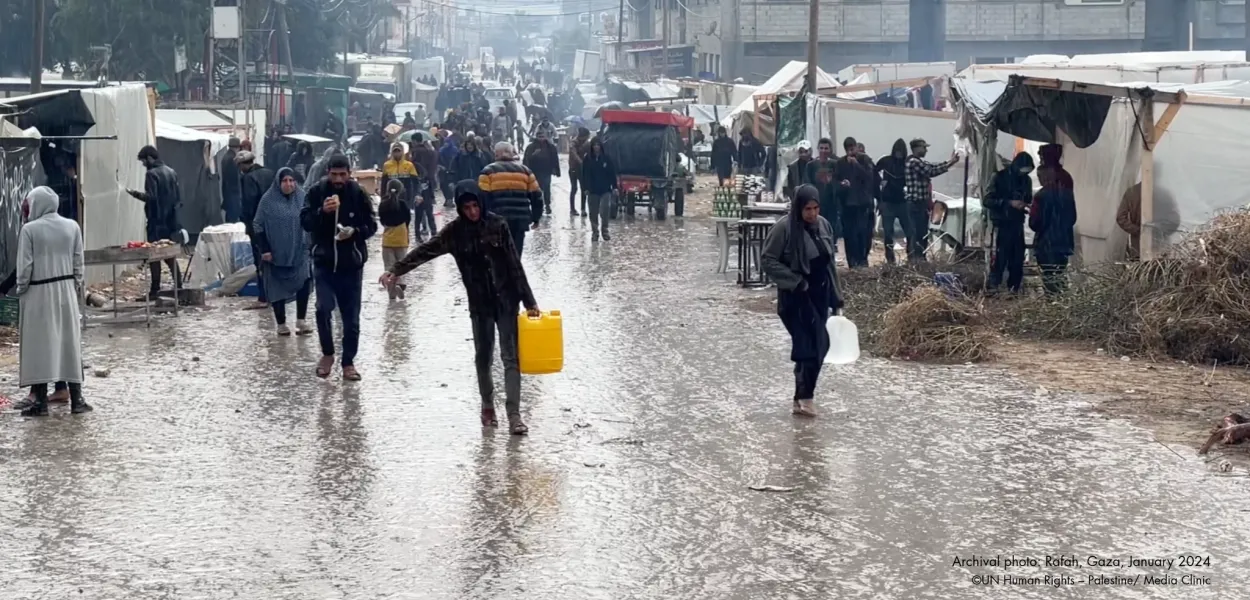
What we are seeing in Gaza is years of human rights violations laid bare by rains.
This is a besieged people, hemmed in by Israeli forces from all directions, concentrated in a sliver of their land which keeps narrowing around them as Israeli troops expand their deployment areas. It is a people displaced almost in its entirety by years of Israeli bombardment and displacement orders. They live in rubble and ruins, under constant Israeli fire even over a year after a ceasefire was announced.
The Israeli blockade and closure continue to restrict the entry and provision of humanitarian assistance, leaving Palestinians in Gaza struggling to secure their most basic needs of life: water, food, medicine and shelter.
Last year the International Court of Justice reaffirmed Israel’s obligation as the occupying power to ensure the basic needs of Palestinians in Gaza. Where Israel doesn’t do so directly, it must at the very least agree to and facilitate relief schemes by the UN and other independent humanitarian actors. Instead, the Israeli unlawful impediments to the entry and distribution of humanitarian assistance and other essentials of life have brought us to the situation we are facing today.
My office is coordinating the Protection Cluster response with more than 120 dedicated protection partners responding to the needs of the most vulnerable groups in Gaza, including persons with disabilities and people with serious medical conditions. We are working with humanitarian actors from different clusters and sectors to ensure the protection of these people is mainstreamed across the humanitarian response. But the supplies available inside Gaza are simply not enough. And there are hardly any safe shelter alternatives on the ground.
More than 80% of the built environment in Gaza has been damaged or destroyed over the past three years including homes and civilian infrastructure. Israeli forces continue this wanton destruction, detonating homes and destroying buildings. Thousands of the buildings left standing are at risk of collapse due to severe damage.
Palestinians have the right to far more than tents. They have a right to a full life, to protection and safety, to dignity, and to return to real, safe homes in all the areas they were forced to flee. Donors and member states must keep pushing for tents and shelter assistance to enter Gaza and reach the most vulnerable ones, including women and children, older persons and persons with disabilities. And they must now push the Israeli authorities to stop blocking rebuilding, to facilitate Palestinians’ return to what is left of their homes, and to commit to reparations and redress.
This is the fourth consecutive winter emergency in Gaza. There can’t be a fifth.